
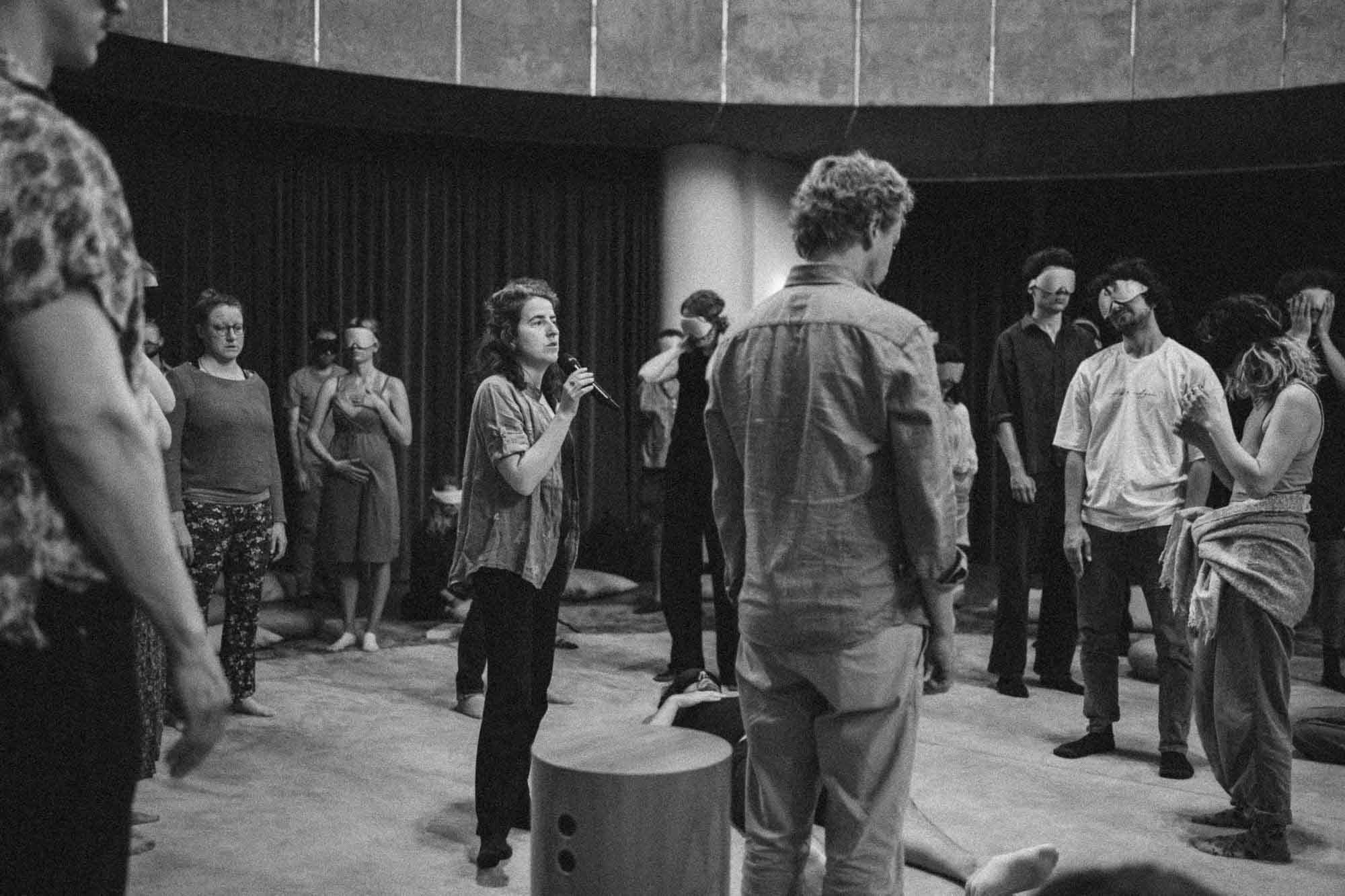

Modern consumer wellness is saturated with tools that promise calm, focus, and better sleep. Yet many interventions struggle with adherence. Meditation takes practice, sleep hygiene competes with late-night stimulation, and “relaxing audio” often becomes background noise. At the same time, headphones have developed to produce spatial audio that can credibly shape perception of space, safety, and attention. That creates an opening for a different proposition. One that treats sound not as ambience, but as a designed stimulus aimed at nervous system regulation.
Olo, founded in 2024, is building into that gap. The company was founded by composer and creative technologist Markus Pesonen and psychosomatic therapist Catarina Brazão. Instead of building a long-tail content library, the team began with a research-led global exploration of immersive sound, supported by large-scale spatial nature recording. Their application teleports users into those soundscapes. With a one press entry, Olo skips endless content browsing and serves sessions framed around guiding mental states over time, with sleep emerging as the first use case.
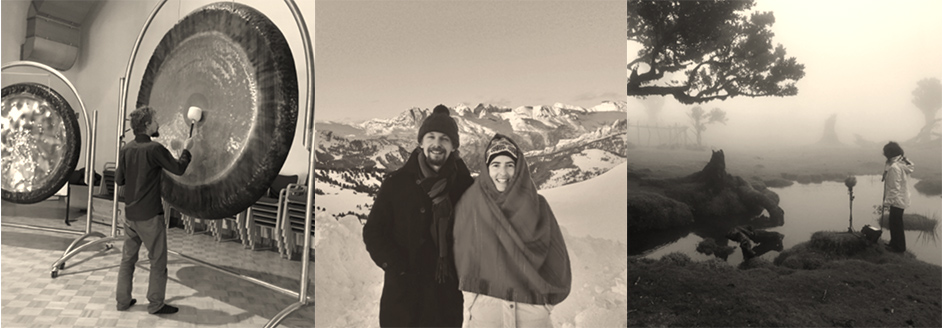
Growing up, Markus Pesonen did not set out to become a digital wellness entrepreneur. He grew up surrounded by music and started earning his first paychecks from his passion at just 16 years old. What followed was a touring cadence reaching 100-plus shows a year, including a 2014 performance at London’s famous Royal Albert Hall. A career built on craft and output, Markus experienced sound as a tool for impact, attention, and energy.
However, the intensity of life on tour started taking its toll. As the constant travelling and performing started becoming a cost, more than a gain, Markus found a new hobby in exploring personal health and well-being. He experimented widely, trying approaches ranging from meditation and yoga to early biohacking and looking for the tools that worked under real-world cognitive load.

But in that search, Markus noticed how his main passion, sound, was still underutilized in the field of personal wellbeing. “Most available applications involved static background sounds and maybe a voice actor reading a script on how to breathe.” Markus says. “I felt like it should be way more immersive than that.” And when he noticed that about nine out of ten people cannot fully access the true benefits of powerful techniques like meditation, the idea to develop an audio-based tool to assist in that process was born.
Olo became a company when Markus’ personal search intersected with somatic practice. Markus met Catarina Brazão, a psychosomatic therapist with decades of clinical experience from over 10,000 one-on-one sessions, as the focus shifted to more structured exploration. Together, they set up a research project looking at the therapeutic benefits of immersive sound and somatics, eventually publishing a peer-reviewed paper on the measurable impact of sound and somatics on the nervous system.
The research was performed unusually hands-on. Rather than relying on generic ambient libraries, the team traveled to the source of the audio. “We went around the world in high-biodiversity places and recorded over a thousand hours of immersive nature sound with these 3D microphones. I’ve been in the jungle with the microphone,” Markus says. At its core, Olo believes that if sound is meant to shift state, production depth is not a cosmetic feature. It is part of the intervention itself. “It really feels like you’re there. And your biology responds as if it were real,” Markus assures.
Open the Olo app and the experience is deliberately sparse. The idea is to remove setup and get you into a session quickly, with minimal decisions upfront. Markus frames the interaction as a single action: “You have headphones, and you launch the app with one press.” The framing stays close to meditation outcomes, but without asking users to learn a technique first. “You don't need to meditate, there's no technique required. All you need is headphones and to close your eyes.”
That low-friction posture extends to how sessions are chosen. Rather than presenting a catalog to browse, Olo selects a session based on circadian timing and adapts through user feedback. The goal is to make initiation consistent, especially when attention is already depleted. Olo differentiates in the sound itself. The immersion is the primary outcome. “Most people’s feedback is: ‘Whoa, I was somewhere else for a moment.’ It’s almost like experiencing space and time.”
In terms of use cases, sleep has emerged as the main entry point. “A huge amount of people have trouble falling asleep. There's too much going on in the evening, and it's hard to wind down.” Markus says. And simple calming audio often fails for busy minds, so the session starts by catching attention before gradually decelerating. “This is where soft content doesn’t cut through. We actually have to capture attention with sounds that are more exciting and then it’s about the delta between where you start and where it ends up going.”
Olo’s strongest public evidence of its therapeutic effects is a peer-reviewed acute cross-over study in Psychophysiology, which recruited 53 healthy participants and included 10-minute exposure to Olo’s spatial audio solution. The nature-based soundscape condition was associated with improved HRV and lower heart and respiratory rates, alongside self-reported improvements on affective measures. These included lower anxiety/depression and higher comfort, enthusiasm, creativity, and belonging.
In the wider literature, music-based interventions have a measurable but heterogeneous signal on stress outcomes. A large meta-analysis by De Witte et al. reported significant reductions across both physiological and psychological stress-related outcomes, with heart-rate effects among the stronger physiological readouts. Although effect sizes vary materially by study design and context.
Nature-sound exposure adds another adjacent anchor. Recent meta-analyses report improvements in emotional outcomes alongside reductions in physiological measures such as heart rate and blood pressure, although environments, stimuli, and control conditions vary widely across studies. Sleep is a defensible target for sound-based products, with one meta-analysis in adults with mental health problems finding a moderate improvement in subjective sleep quality after music interventions, despite predictable blinding constraints. Evidence for continuous noise as a sleep aid is less settled, with reviews concluding efficacy remains unclear across objective and subjective measures.
Olo’s near-term product expansion adds a guided self reflection layer on top of listening sessions. The goal is to enable structured introspection, triggered after a session when arousal is lower, attention is less fragmented, and there is more space for constructive introspection. Olo also adds an AI component into the mix, positioned around prompting. Markus explains, “our LLM that isn’t telling you answers, but asking better questions so you come to insights.”
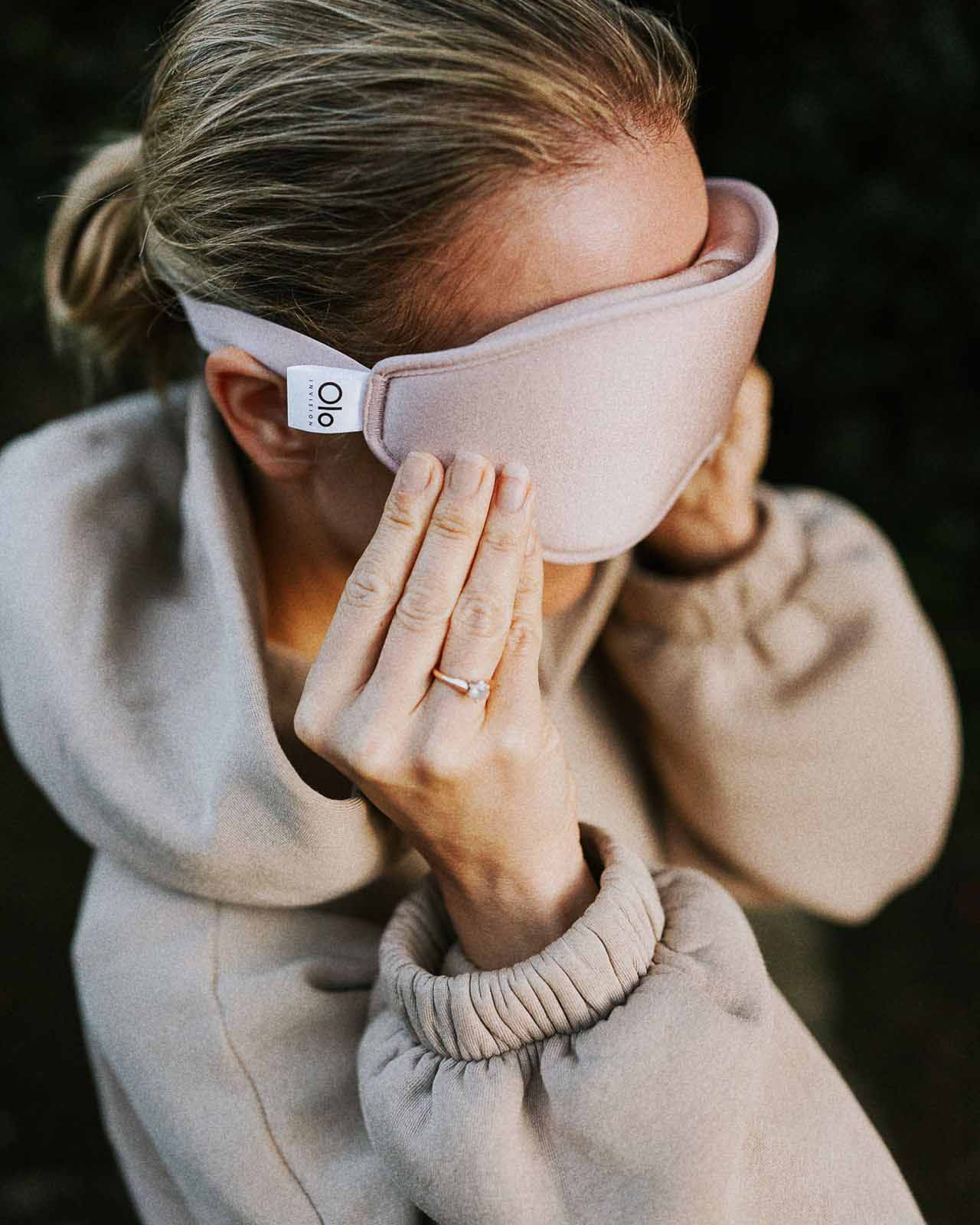
The product roadmap also includes physical products that reinforce the core immersion logic. A blackout eye mask was built as an add-on, tied to light exposure and sleep routines. “It was created as an add-on product, just a very high-quality, full-blackout eye mask. But we were really surprised how many people were buying it, and buying it as gifts.” Markus says.
On distribution, Olo is leaning into professional channels that sit adjacent to clinical practice. “We’re working with therapists, coaches, and some longevity doctors.” The regulatory posture is to stay outside an FDA pathway, while accumulating evidence with practitioners and researchers. Over time, the product direction points toward integrating subjective reflection with wearable-derived physiology. “Integration is on the roadmap. The combination of natural-language subjective assessment of yourself and the wearable’s objective data from your nervous system gives the perfect crossing of information for improvement.”
Commercially, growth is framed around partnerships and physical expansion. “We close partnerships for immediate cash flow to open a location, but that also opens a new channel,” Markus reveals. The strategic logic is that physical spaces can function as listening infrastructure: reducing sensory noise and stabilizing context so audio can more reliably shift arousal and attention. In that framing, expansion is not separate from the product story, but a way to make the neuro-inspired premise of guided listening and post-session reflection easier to deliver at scale.
Markus Pesonen is the co-founder and CEO of Olo, a consumer wellbeing company built around immersive, nature-based spatial audio. He comes from music and sound design, and has described his path as moving from high-output touring into a longer-term focus on tools that help people downshift and recover under real-world cognitive load. At Olo, he leads the soundcraft and product direction, pairing high-fidelity recording and composition with somatic framing developed with co-founder Catarina Brazão.
Olo is a US-based company building a mobile app that delivers spatial nature soundscapes intended to support nervous system regulation, with sleep as an early mainstream use case. Its sound journeys have been used as the stimulus in a randomized acute cross-over study published in Psychophysiology by researchers at South-Eastern Finland University of Applied Sciences. Beyond the app, the team also operates Olo Center, a retreat venue in Finland’s Saimaa lake region that features “Immersive Sound Journey” experiences as part of its programming.
Visit: olo.app
Produced with support from

.svg)







.svg)

