
.jpeg)
Science Corporation is a vertically-integrated, full-stack neural engineering company. Our mission is to restore and extend life by transcending the limits of biology. We are developing advanced brain-computer interface technologies and devices to address critical unmet medical needs and, longer term, to transform the human condition through neural engineering and advanced perfusion technology. Science is headquartered in Alameda, Calif.
Dena Cook, Signal Communications
Science Corporation, a leader in brain-computer interface (“BCI”) technology, has announced the preliminary clinical trials results for its PRIMA retinal implant. The patients in the trials had lost their central visual field, which makes them unable to read and struggle to recognize faces. The results showed that the PRIMA implant restored real form vision in these patients such that sequences of letters can be read with a clinically meaningful improvement of letter acuity.
“The results demonstrate a milestone in the treatment of blindness caused by geographic atrophy due to age-related macular degeneration. For the first time it was possible to restore real form vision in a retina that has deteriorated due to age-related macular degeneration” said Professor Frank Holz, MD (PDF), scientific coordinator of the PRIMAvera study. “Prior to this, there have been no real treatment options for these patients,” continued Professor Holz, who is Chairman and Professor, Department of Ophthalmology, at the University of Bonn, Germany.
Max Hodak, Science Corp CEO, added: “To my knowledge, this is the first time that restoration of the ability to fluently read has ever been definitively shown in blind patients. This represents an enormous turning point for the field, and we’re incredibly excited to bring this important technology to market over the next few years.”
The study was designed to demonstrate PRIMA’s safety and efficacy to reach European market approval (CE mark). PRIMA, owned and manufactured by Science Corp, is based on original research done at Stanford University and later by Pixium Vision of France.
The PRIMA clinical trial, called PRIMAvera (NCT04676854), is a clinical study with 38 human subjects suffering from geographic atrophy (GA), who were implanted with the PRIMA retinal system to restore vision. Geographic atrophy is an advanced form of dry age-related macular degeneration (AMD) where the central area of the retina, and thus the patient’s sight, has deteriorated.
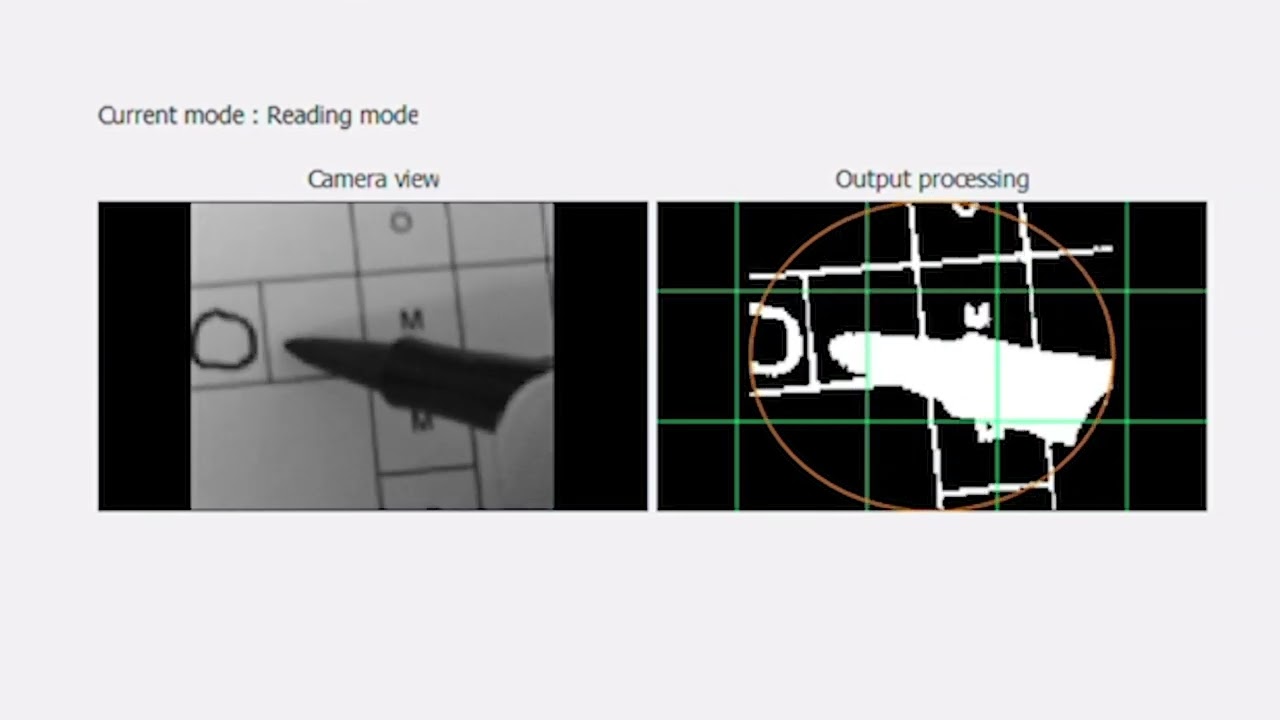
The results show a meaningful improvement of visual acuity when using the system. Patients show a notable improvement in their letter acuity while using the PRIMA implant to read a series of letters; some are able to read longer text.
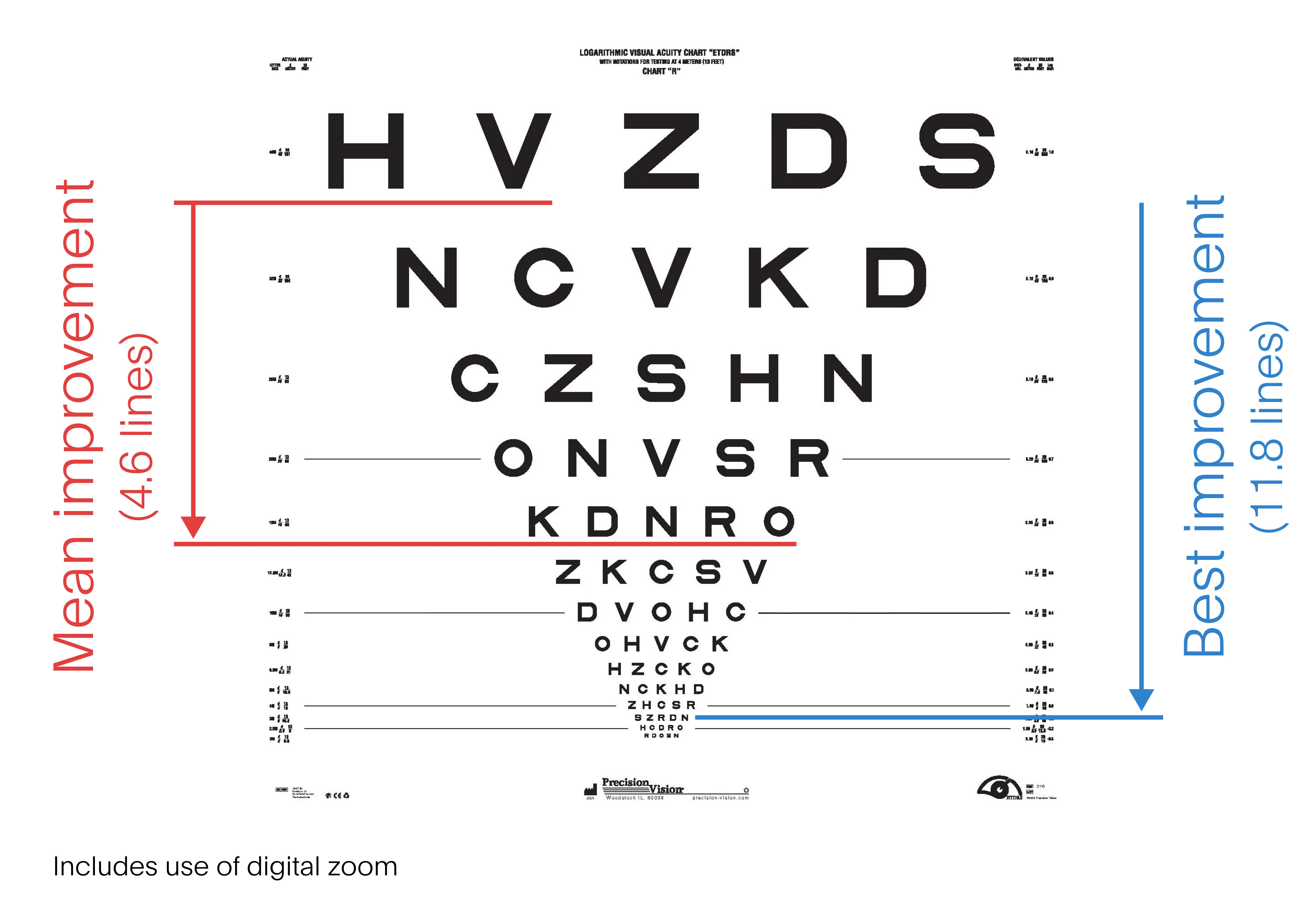
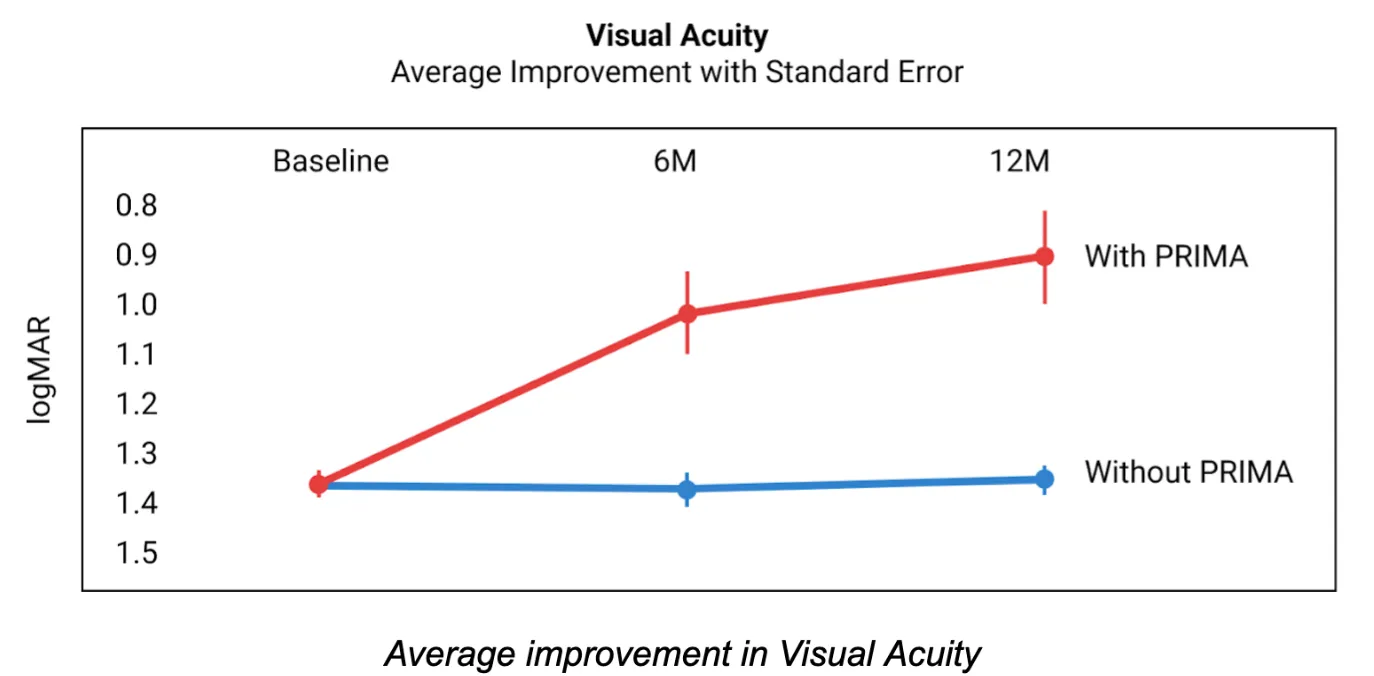
The visual acuity of all participating patients was measured at 6 and 12 months post implantation via logMAR scoring including the use of zoom (zero logMAR indicates normal vision, positive values indicate poor vision), and it demonstrated clinically significant improvement:
The PRIMA system is a visual prosthesis which consists of a photovoltaic implant—totally cableless and autonomous—surgically implanted under the retina, a special pair of glasses with a camera and a projection system, and a pocket processor that processes the image for clarity and magnification.

Zoom is an assistive feature of the PRIMA system that changes the size of the features in the image on the retina and implant, but provides a correspondingly smaller field of view.
According to the United States National Institute of Health, there are about one million cases of GA in the US, and about 160,000 new cases occur per year. The American Academy of Ophthalmology estimates that over 8 million people are affected worldwide with GA. The most significant risk factors are increasing age and family history.
Science Corporation is a vertically-integrated, full-stack neural engineering company. Our mission is to restore and extend life by transcending the limits of biology. We are developing advanced brain-computer interface technologies and devices to address critical unmet medical needs and, longer term, to transform the human condition through neural engineering and advanced perfusion technology. Science is headquartered in Alameda, Calif.
Dena Cook, Signal Communications

.svg)