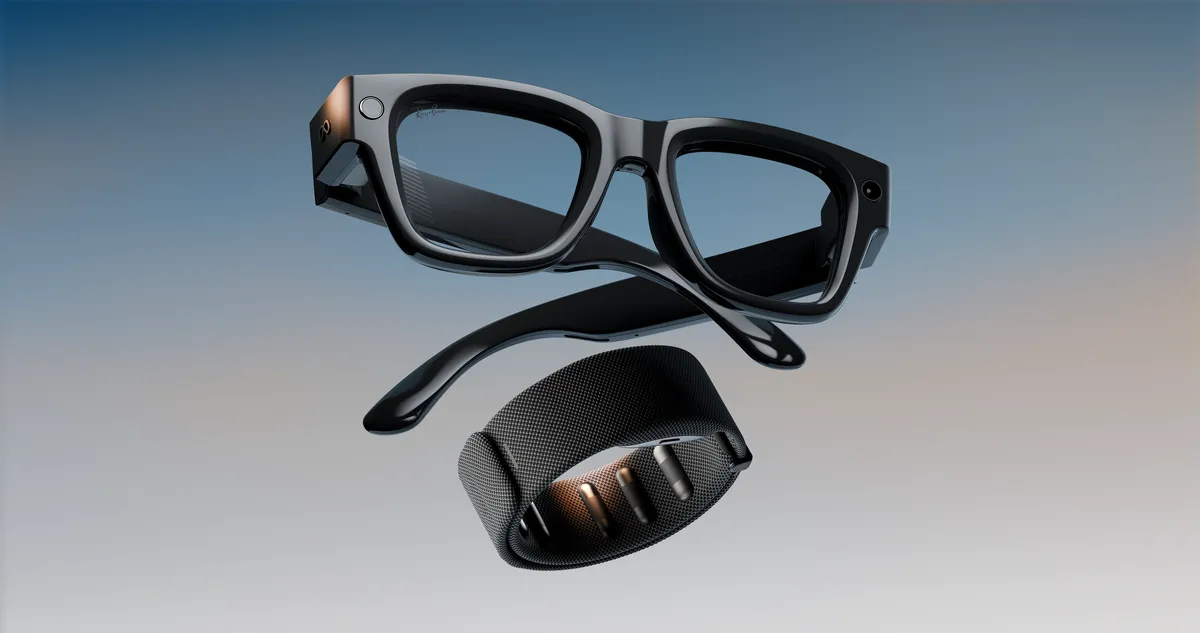
Meta has unveiled the Neural Band, a slim wrist-worn interface that decodes motor neuron signals to control accompanying digital devices. Designed as a companion to the company’s Ray-Ban smart glasses (camera-equipped eyewear that merges social media, voice assistants, and augmented reality displays), the band shifts interaction from taps and voice commands to subtle neural intent. Meta's vision is of a future where users can scroll, type, and navigate apps through finger twitches invisible to the outside world.
The launch marks a striking step in Meta’s ambition to build intuitive, always-on interfaces for the post-smartphone era. By translating years of CTRL-Labs research into a consumer form factor, the company is testing whether neural input can move into the daily lives of its mass consumer base. Meta claims that non-invasive sensors at the wrist can capture single-neuron activity with a fidelity once reserved for brain implants; a bold assertion that places the Neural Band at the intersection of neuroscience breakthrough and consumer electronics experiment.
Meta has unveiled the Neural Band as part of its latest Ray-Ban Display glasses launch, positioning the wrist-worn device as a new input channel for augmented reality. The band uses electromyography (EMG) to detect tiny electrical signals generated when motor neurons activate muscles in the hand. These signals are then decoded by AI models into commands such as scrolling, clicking, or typing, providing a discreet alternative to voice or touch.
Meta frames EMG as addressing the weaknesses of existing inputs. Voice commands lack privacy, mid-air gestures can be fatiguing, and touch requires an external device. By contrast, EMG enables silent, low-effort interaction. Demonstrations show users composing short texts and navigating AR interfaces with finger twitches invisible to outside observers.
The device will not be sold on its own but bundled with the new Ray-Ban Display glasses at a launch price of $799. Sales begin September 30 in the United States, with rollouts to Canada, the UK, France, and Italy planned for early 2026. By anchoring the Neural Band to its eyewear ecosystem, Meta is signaling that neural input is central to how it intends to differentiate its AR products in a market where hardware margins remain tight.
The Neural Band is the first consumer product to emerge from Meta’s 2019 acquisition of CTRL-Labs, a startup focused on peripheral-neural decoding at the wrist. In bringing this research into a wearable form factor, Meta is moving from proof-of-concept experiments toward testing whether high-fidelity neural signal capture can withstand the variability of everyday environments.
The Neural Band relies on electromyography (EMG), recording the tiny electrical signals that motor neurons send to the muscles of the hand. Unlike EEG, which captures diffuse brain activity at the scalp, EMG offers a peripheral but more localized window into neural control. Meta’s researchers argue that by combining high-density EMG sensors with modern machine learning, it is possible to decode motor commands with a precision approaching that of invasive brain-computer interfaces.
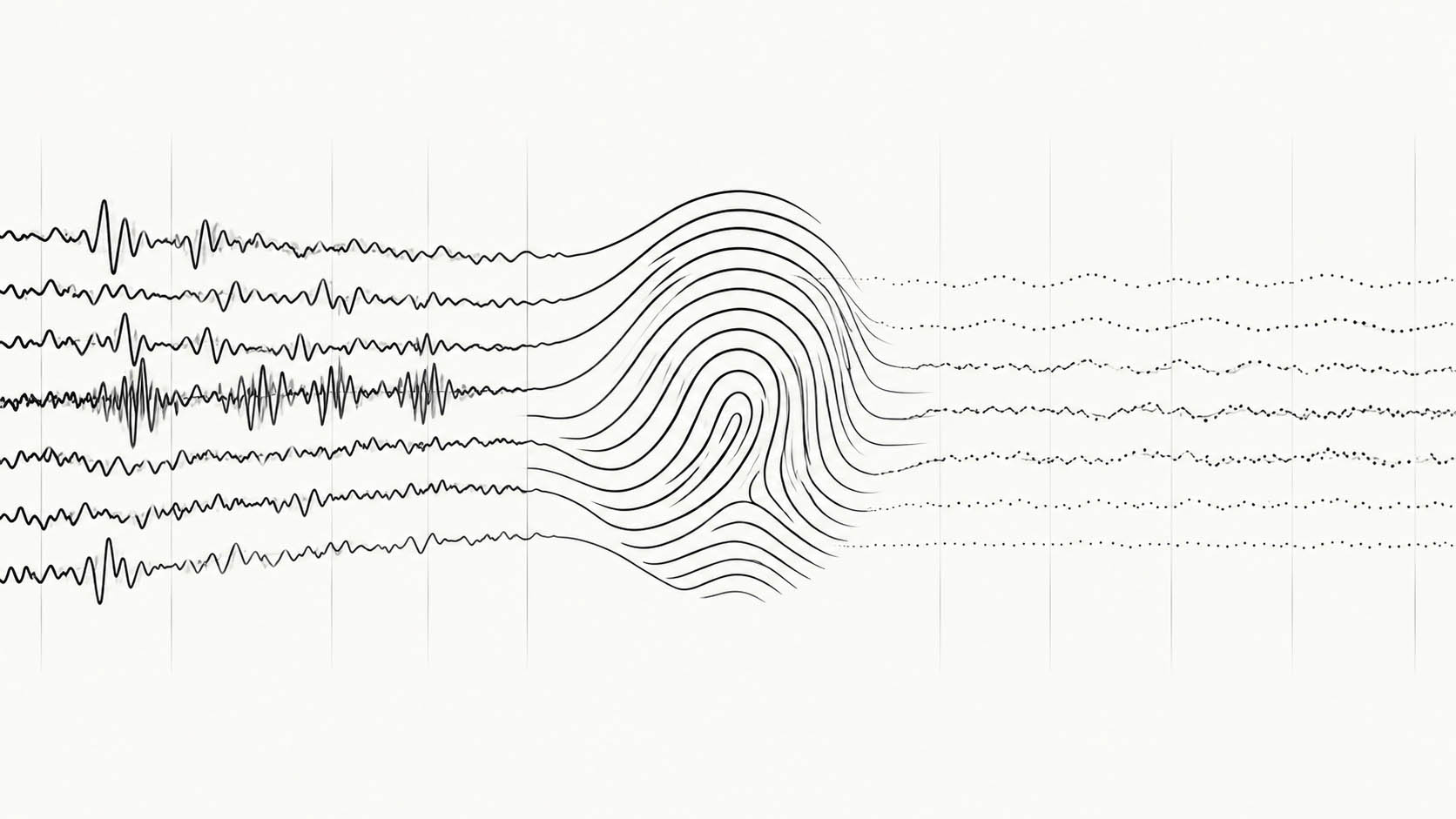
A recent Nature paper from Meta’s team describes achieving single-action-potential resolution, meaning the system can isolate activity from individual motor units at the wrist. This represents a step beyond traditional EMG, which typically captures aggregate muscle activity. By segmenting signals down to the level of single motor neurons, the Neural Band can reconstruct fine-grained hand movements and even infer intended finger actions that never manifest as overt motion.
The most striking demonstrations involve decoding intent without visible movement. Because motor neurons activate before a movement is executed, the device can register a “neural click” when a user merely imagines pressing a button. In controlled settings, this allows rapid text entry, navigation of digital menus, and manipulation of virtual objects with a fidelity previously reserved for invasive systems. For neuroscience, the implication is that non-invasive recordings may not be as limited as once assumed: carefully targeted EMG can approximate signals closer to motor intent.
Challenges remain. The white paper’s results were obtained under optimized laboratory conditions, with stable electrodes and supervised training sessions. Bringing this fidelity into consumer hardware will require overcoming signal variability caused by movement, sweat, and daily wear. Calibration, electrode placement, and robustness outside controlled settings are unsolved problems that could determine whether the Neural Band performs as reliably in practice as it does in Meta’s demonstrations.
The most consequential claim is Meta’s report of single-motor-unit resolution from the wrist. If this holds beyond lab settings, it reframes EMG not as a proxy for muscle activity but as a direct access point to the neural code. For neuroscience, this challenges the long-standing assumption that high-fidelity decoding requires implants, and could redirect funding and research priorities toward peripheral rather than cortical interfaces.
Equally significant is the shift from movement to intent. By detecting “neural clicks” before action execution, the Neural Band edges into a space where motor intent becomes a usable signal. This blurs the boundary between biomechanical and cognitive data. The scientific promise is clear, finer control with less effort, but so is the ethical risk: devices that register decisions the body never carried out raise difficult questions about consent, privacy, and how such data might be logged or monetized in consumer ecosystems.
Finally, Meta’s decision to debut this technology through an AR product bundle highlights a strategic inversion. Advances with potential clinical relevance are being validated first in consumer markets, where the reward is scale and data rather than therapeutic impact. Millions of everyday interactions could generate unprecedented neural datasets, but outside of medical oversight. Whether this accelerates translation into healthcare or dilutes it into novelty depends on how the technology performs under the pressures of real-world adoption and how responsibly that data is managed.
The Neural Band is part of a broader shift in which large technology companies are moving into neurotechnology through their wearable ecosystems. Apple has patented EEG-enabled AirPods, Samsung has experimented with brain-monitoring sensors, and Google continues to file biosignal patents. By bundling neural input directly into a consumer device, Meta is accelerating this trend, bringing techniques once confined to medical labs into the everyday hardware market.
That shift raises questions of credibility and stewardship. Meta’s track record on privacy and data protection has drawn scrutiny, while Musk’s Neuralink has attracted headlines for overpromising and underdelivering. When companies with contested reputations become the face of neurotechnology, they risk framing brain-computer interfaces around spectacle or controversy rather than clinical reliability. This dynamic could either normalize the field for a wider public or erode trust at the very moment when clinical translation is gaining traction.
For the neurotech field, the significance of the Neural Band may lie less in its immediate functionality than in what it signals about direction. Neural interfaces are moving out of research settings and into consumer platforms with unprecedented speed. Whether this accelerates healthcare applications or redirects innovation toward lifestyle use remains to be seen, but the trajectory is clear: decoding neural intent is no longer speculative, it is becoming part of the competitive playbook of the world’s largest technology firms.
.svg)