
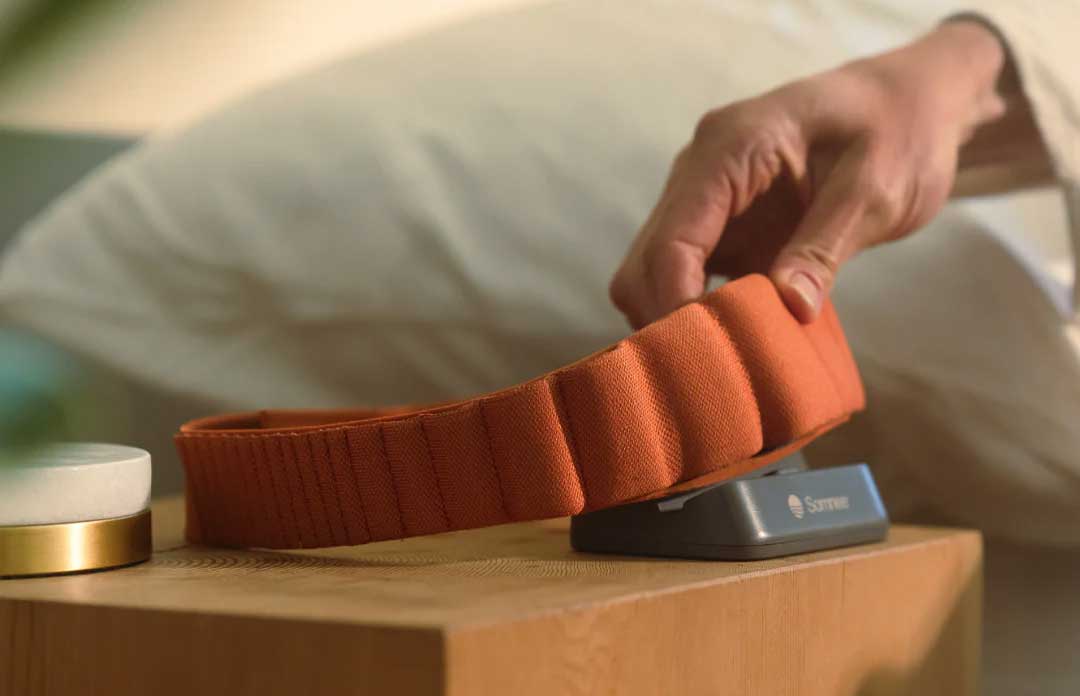

For as long as humans have dreamed, there have been attempts to take a look inside; from ancient dream books to Freud’s psychoanalytic reading of dreams. But for most of that history, sleep could only be interpreted from the outside. The advent of electroencephalography, or EEG, changed the equation. Neurotechnology firms can now read the sleeping brain’s electrical activity, turning sleep into a state that can be staged, scored, and studied.
But reading sleep patterns is only the first step. A new generation of neurotech companies is moving from passive tracking toward systems that monitor, modulate, and adapt to sleep as it unfolds. Increasingly smaller wearables are complemented by adaptive audio and light systems, non-invasive stimulation, and implantable clinical devices. Spanning a range of forms and modalities, neurotech is dreaming up sleep solutions that optimize the sleep of the ordinary consumer and address clinical sleep disruptions plaguing millions.
Sleep is often seen as a single block of recovery, but the brain does not simply switch off for eight hours. Across the night, it moves through repeating cycles of non-rapid eye movement sleep, NREM, and rapid eye movement sleep, REM. Each cycle carries the brain through lighter sleep, deeper sleep, and more activated dream-like states. The balance shifts as the night unfolds. Early sleep is usually richer in deep NREM, while later sleep contains longer periods of REM.
NREM sleep is where much of the electrical architecture of sleep is becoming visible. As sleep deepens, the brain produces slow waves, large synchronized patterns of activity that are associated with memory consolidation. NREM also contains sleep spindles and K-complexes, shorter features that help define sleep stages and reflect how the sleeping brain processes information while remaining partly closed off from the outside world.
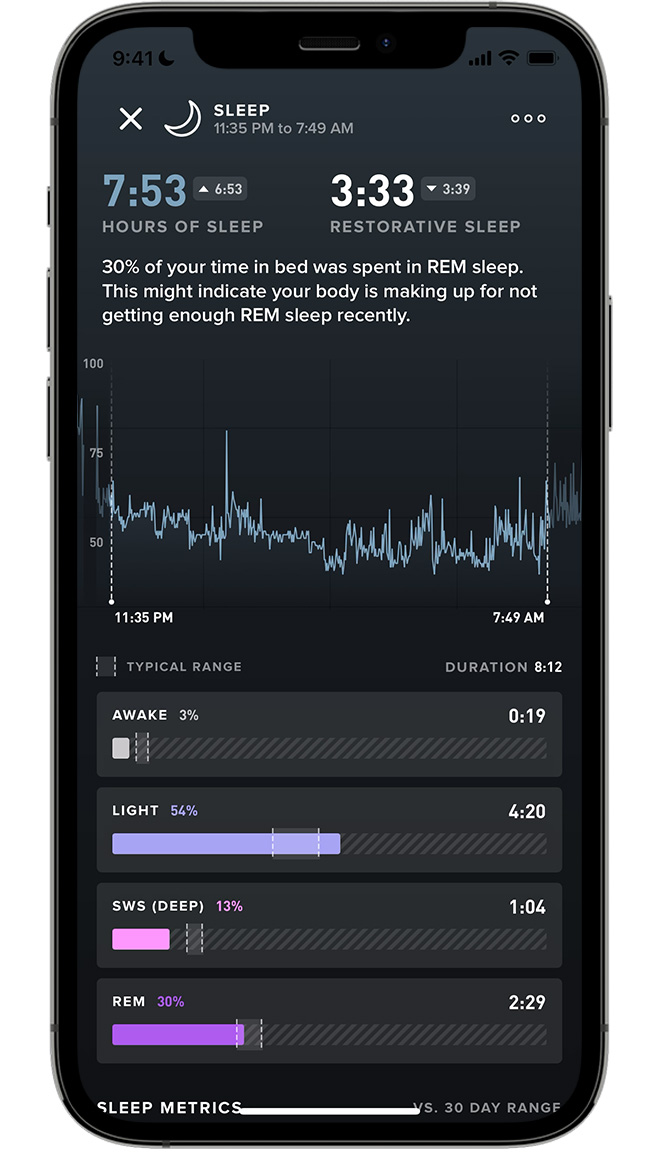
During REM, the brain becomes more active. Eyes move rapidly, muscle tone drops, and dreaming becomes more vivid. Dreams can also occur outside REM, but REM remains the main reference point for the more vivid side of sleep. It is also the stage most closely associated with emotional processing.
Even when a person successfully crosses into a sleep state, recovery can break down. A person may spend enough time in bed while experiencing repeated arousals, fragmented sleep, unstable breathing, restless movement, or poor circadian timing. These disruptions are not just linked to electrical REM/NREM signals, but tie into respiration, oxygenation, autonomic balance, light exposure, movement, temperature, and the body’s internal clock.
Sleep is partly defined by brain activity, while also strongly shaped by physiology and contextual clues. That has made it difficult isolate a single metric and reduce to a nightly sleep score. For neurotech, it creates two connected questions. How close can systems get to reading the full sleep picture as it unfolds, and how precisely can they intervene?
Most current sleep tech does not read the brain. Rings, watches, mattresses, and bedside devices infer sleep through the body’s visible traces, capturing metrics like movement, heart rate, temperature, breathing, and turning them into estimates of what happened overnight. Oura and WHOOP have made this style of tracking a habit of millions. But while these systems are easy to scale and comfortable for users, their limitation is clear. They rely on proxy signals, missing what actually happened inside the brain during the night.
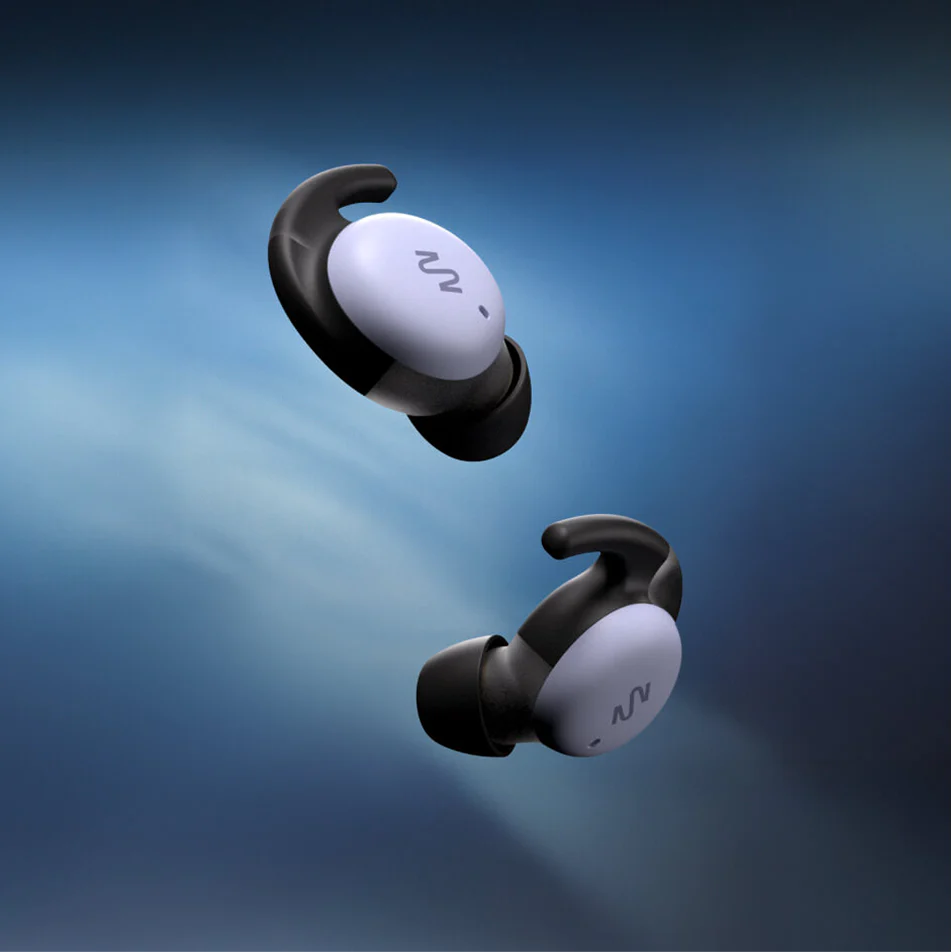
EEG takes a look at the source material of sleep. Sleep stages are largely defined by electrical brain activity, creating a natural opening for electroencephalography. A growing class of consumer neurotech startups is now embedding these electrodes into headbands and in-ear earbuds meant to be worn overnight. NextSense and Naox are pushing in-ear EEG as a more wearable route into long-duration brain recording, while Somnee and Elemind go for a head-worn approach.
Brain monitoring does not end with EEG, although the sleep link becomes less direct. Bía Neuroscience integrates fNIRS in its sleep mask to track oxygenation changes in cortical activity. fNIRS cannot track spindles or REM directly, but sleep onset, arousal, relaxation, and frontal brain-state changes each have hemodynamic signatures that can be used to guide audio-based feedback throughout the night.
Clinical sleep monitoring generally goes beyond EEG. Polysomnography (PSG), the lab-based golden standard, combines brain, eye, muscle, cardiac, breathing, oxygenation, and movement signals to read what happens during the night. That fuller picture is why sleep medicine can diagnose conditions that consumer products can only gesture toward.
The direction of travel is increasingly multimodal, creating compact versions of the signal logic behind PSG. The strongest monitoring systems will likely be those that combine brain, movement, physiological, acoustic, and environmental signals. IDUN Technologies is one example, pairing in-ear EEG with contextual signals such as IMU movement data to separate neural activity from motion, position, and sleep disruption.
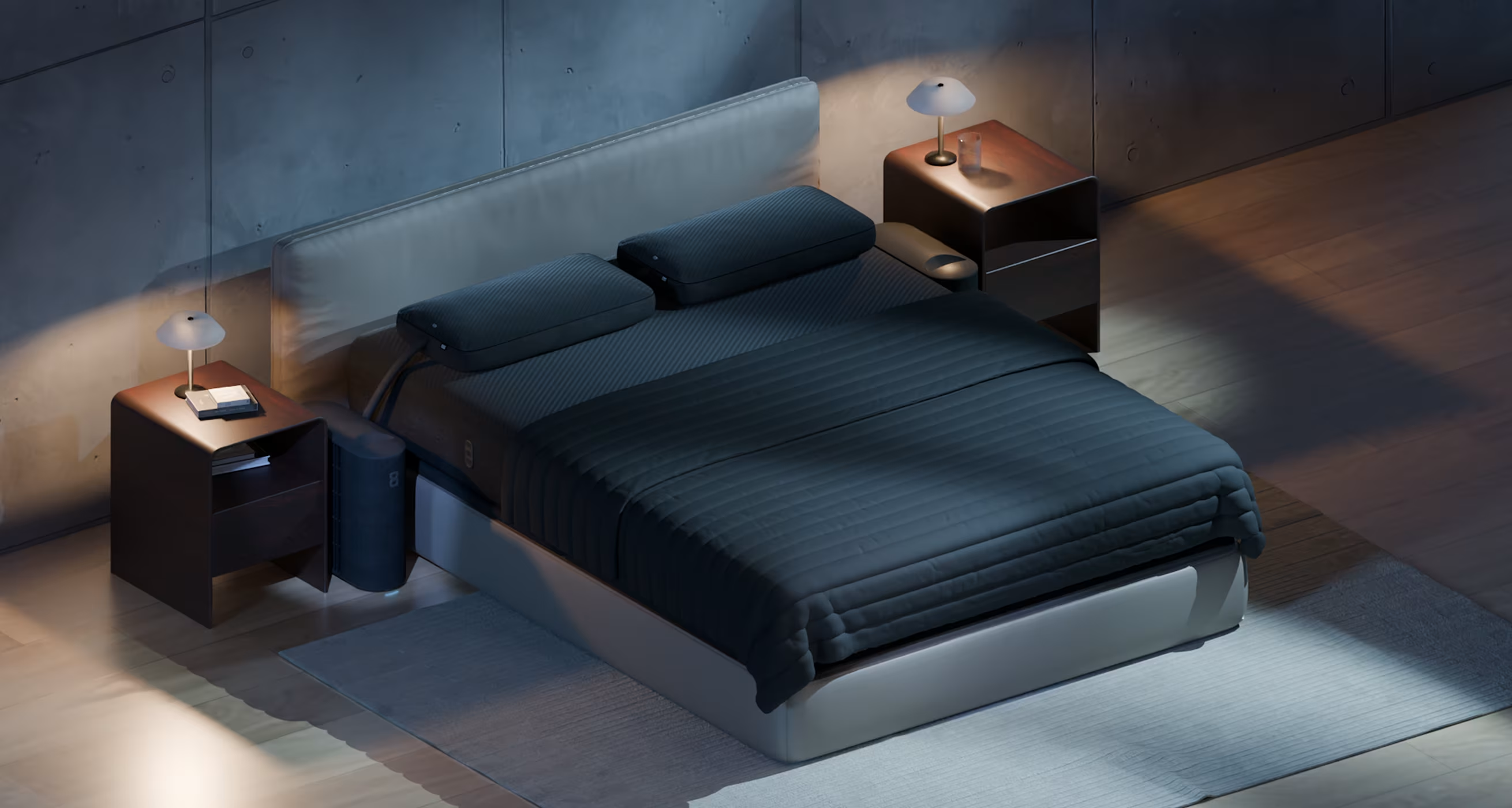
Reading the inner workings of sleep has opened a window towards actively shaping it. Sleep modulation now spans a wide range of interventions, from audio and light cues to electrical stimulation, peripheral neuromodulation, and more speculative approaches such as ultrasound. Most are designed to help people fall asleep quicker. Others target deep sleep, circadian timing, breathing, movement, or even memory consolidation and lucid dreaming.
Audio is the most accessible route into sleep modulation. People already use sound to fall asleep, but neurotech pushes that behaviour into more adaptive territory. Elemind uses EEG-guided acoustic stimulation, while companies such as Audicin, NeuroAcoustics, SOND, NextSense, and Bía Neuroscience each sit near the edge of sleep soundscapes, brain-state feedback, and adaptive audio. The main distinction is between generic sleep audio and stimulation that is timed to the user’s state and verified neuroscientifically.
Light, another sensory approach, works through the circadian system. It does not need to measure the brain directly to influence sleep, as light exposure is one of the main signals the body uses to regulate sleep-wake timing. Neurolight uses light and sound stimulation to entrain brain activity toward targeted states. Nurolight points to a more clinical-adjacent version, using light-based support for sleep-wake disruption in dementia and aging. Bía also sits near this category if its mask-based wake cues are included.
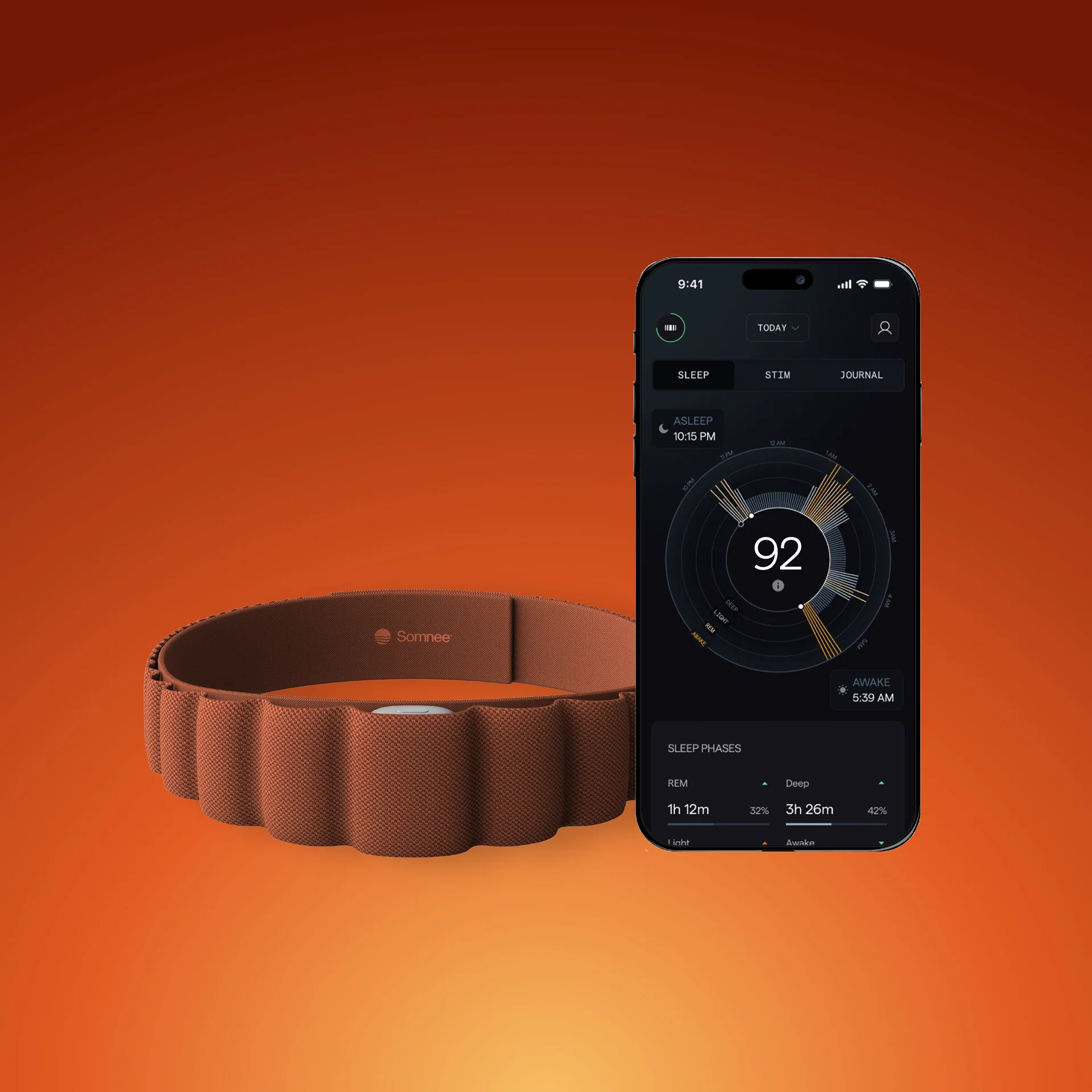
Electrical stimulation moves closer to traditional neuromodulation. Somnee uses personalized tACS in a consumer sleep context, while tDCS and related stimulation methods have been explored in research and older insomnia-adjacent products. Neurovalens sits on a more clinical pathway, using vestibular stimulation to treat chronic insomnia.
Focused ultrasound is among the most experimental approaches on the sleep modulation frontier. Prophetic recently captured attention by using low-intensity ultrasound and REM-state targeting as part of its lucid dreaming thesis. It is a head-turning category marker, but one that should be framed carefully. Dream modulation is much less established than sleep tracking, acoustic stimulation, or regulated sleep disorder treatment, and Prophetic showed no peer-reviewed data to back up its dream-inducing efficacy claims.
Sleep modulation extends beyond the brain itself. Some approaches work through peripheral nerves, autonomic pathways, and muscles that shape the ability to sleep normally. Vagus nerve stimulation sits in this category, with consumer devices such as Pulsetto claiming sleep and relaxation benefits through autonomic modulation. Inspire Medical and Nyxoah stimulate the hypoglossal nerve to help keep the airway open in obstructive sleep apnea, while Noctrix Health targets restless legs syndrome through lower-leg nerve stimulation.
Closed loop is the organizing idea behind most sleep neurotech. A system detects the user’s state, classifies a stage or feature, delivers stimulation, and adjusts based on the response. Timing can decide whether an intervention supports sleep, does nothing, or disrupts the night. Elemind, NeuroAcoustics, NextSense, Somnee, SOND, Bía Neuroscience, and Prophetic all point to different versions of that approach.
Beyond wellness applications, neurotech is increasingly moving into clinical sleep care. Insomnia is one of the clearest examples. Neurovalens’ Modius Sleep uses electrical vestibular stimulation to treat chronic insomnia. The firm received FDA approval for its tech in 2023 and later received EU MDR compliance to clinically treat insomnia in Europe.
Obstructive sleep apnea is mostly treated through implantable neurostimulation. The core problem is repeated airway collapse during sleep, leading to breathing disruption, oxygen drops, arousals, and fragmented sleep. Inspire Medical received FDA premarket approval for its upper airway stimulation system in 2014, while Nyxoah’s Genio System 2.1 received FDA approval in 2025. Both stimulate the hypoglossal nerve to activate airway muscles and help keep breathing stable during sleep.
Restless legs syndrome sits between neurology and sleep medicine, and involves uncomfortable sensations and an urge to move that can make sleep difficult to initiate or maintain. Noctrix Health, recently acquired by Resmed in a deal over $300m, targets this through TOMAC, a lower-leg stimulation approach for moderate-to-severe primary RLS. The FDA granted De Novo classification for its system in April 2023 to reduce RLS symptoms and improve sleep quality in adults refractory to medication.
Clinical sleep also depends on better measurement. Polysomnography remains the reference standard, but lab testing is expensive, hard to scale, and poorly suited to long-term observation in natural settings. Dreem became an early example of wearable EEG sleep monitoring outside the lab, before Beacon Biosignals acquired the company in 2023 and folded it into a more clinical and research-facing layer. Naox adds a newer in-ear route after receiving FDA 510(k) clearance for its in-ear EEG system earlier this year.
The neurotech sleep market is forming across two main axes. Some companies are moving from passive monitoring toward active modulation, while others are moving from consumer wellness into regulated clinical care. The split also runs through the signal pathway itself, between systems that read or act on the brain directly, systems that work through downstream physiology, and approaches combining both.
The map below organizes the spread, from proxy trackers and wearable EEG to adaptive audio, light-based entrainment, vestibular stimulation, peripheral nerve stimulation, and implantable clinical devices.





.svg)