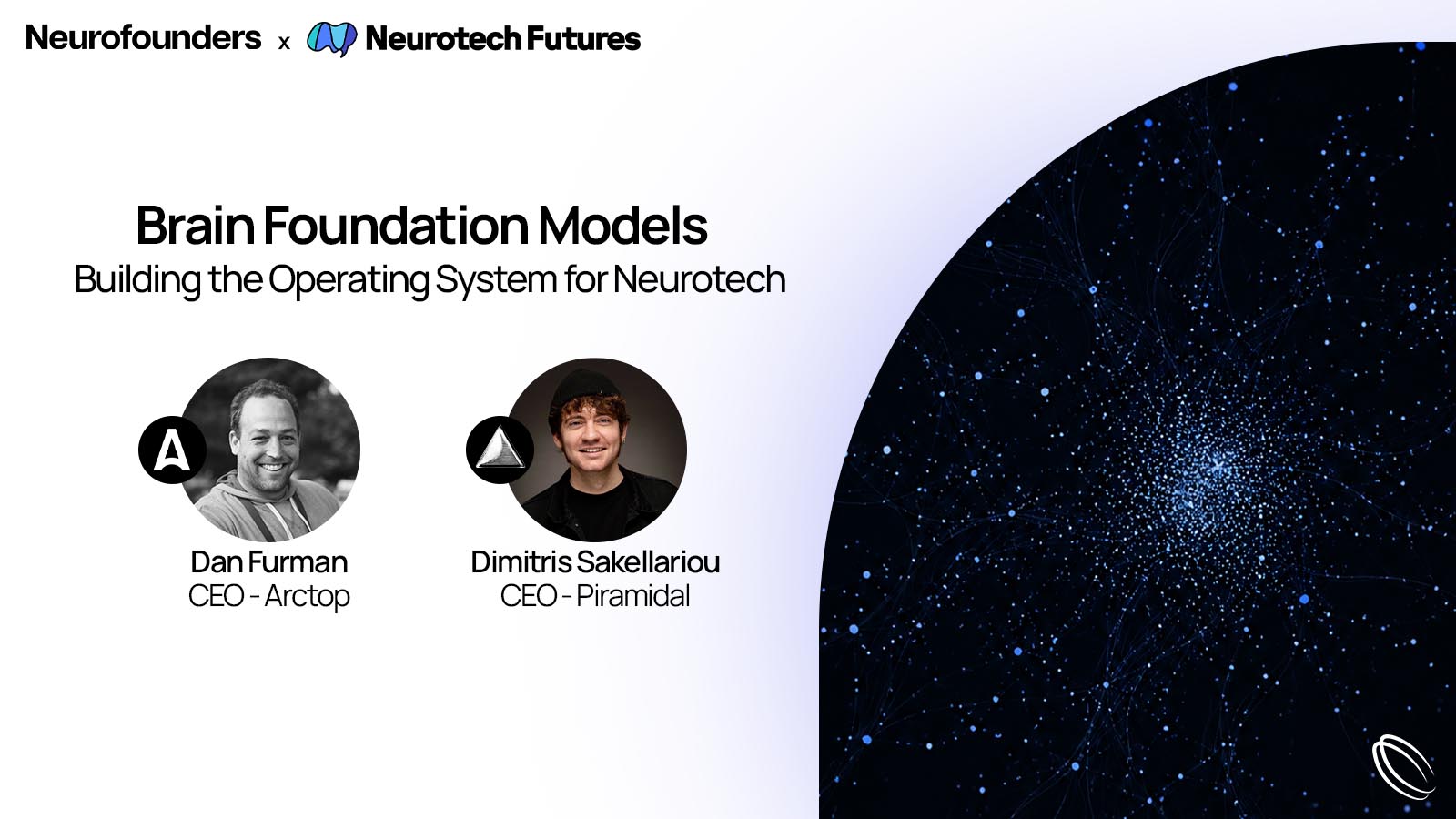



Piramidal is developing an EEG foundation model for clinical brainwave interpretation. The company focuses on continuous neurological monitoring, with early applications in ICU settings where EEG data can be difficult to review at scale and abnormal brain activity may require faster escalation.
The system is trained on large-scale EEG datasets and is designed to identify patterns across patients, recording setups, and clinical contexts. Public materials describe use cases including neurologist co-pilots, biomarker discovery, ICU monitoring, epilepsy, and sleep-related analysis.
Piramidal is working with Cleveland Clinic on an ICU monitoring model that analyzes continuous EEG streams and flags abnormal brain activity for clinical review. Its role on the map is as an AI neurosoftware infrastructure company building a generalizable interpretation layer for EEG-based neurological care.

Arctop is a neurotechnology company building a software-centric brain-computer interface platform that interprets real-time neural signals captured from non-invasive wearable sensors. Its technology layer translates brain activity into actionable cognition metrics and interaction data that can be integrated into third-party applications, games, and tools.
The platform is hardware-agnostic and provides SDKs and APIs for mobile, AR/VR, and other ecosystems, enabling developers to embed cognition-aware features without managing raw signal processing. Arctop also supports personalized models that tailor cognitive insights to individual users and workflows.
Arctop’s system is positioned for use by software developers, product teams, and enterprise applications spanning health, productivity, entertainment, and human-computer interaction. The company’s approach aims to broaden access to BCI-driven experiences without requiring implants or specialized hardware deployment.

.svg)