


While US venture capital continues to flow into invasive neural implants and China ramps up its state-led push for "AI-brain fusion," the UK has launched a co-ordinated offensive to capture a leading share of the non-invasive market. With the global neurotechnology sector projected to reach $22 billion by the end of the year, the UK’s Advanced Research and Invention Agency (ARIA) has launched a "Blue-Sky" Proof-of-Concept Fund to catch up.
This initiative marks a definitive inflection point for the UK, targeting the non-invasive sector, a market projected to reach $12.4 billion by 2030. The strategy rests on a three-pillar model: leveraging local world-class neuroscience research, bridging a chronic early-stage innovation gap, and using the centralised National Health Service (NHS) as a platform for rapid clinical validation and scaling.
The UK has long been a global powerhouse in neuroscience research, yet it has faced a persistent innovation gap; the structural inability for speculative, early-stage companies to access the high-risk capital needed to move beyond the lab. Historically, the most ambitious British neuro-innovations have stalled in the "valley of death" between academic grants and private Series A funding.
The launch of Cambridge NeuroWorks in 2024 serves as an operational hub to fix this. A multi-million-pound collaboration between the University of Cambridge and eight partner institutions, NeuroWorks is ARIA’s official Activation Partner for their £69 million Scalable Neural Interfaces programme. Unlike conventional research grants, this three-year program identifies "original thinkers" who can navigate the UK’s unique advantage: the ability to test radical, non-invasive interfaces within a centralised health system.
While the US leads in capital-intensive, invasive brain-computer interfaces, the UK is carving out a strategic niche in non-invasive and minimally invasive technologies. The UK’s choice to focus on the saturated non-invasive space is a calculated high-science decision. The goal of ARIA-funded projects is to achieve "invasive-level" precision in non-invasive modalities, using advanced AI decoding and engineered biology to overcome the traditional signal-to-noise barriers of sensors outside the skull.
“Neurodegenerative disorders are calling for bold action to change the status quo,” says Dr Aga Iwasiewicz-Wabnig, Blue Sky Lead at Cambridge NeuroWorks. “This fund is a platform for original thinkers to test moonshot ideas that could transform brain health globally.”
The Advanced Research + Invention Agency (ARIA) was created by an Act of Parliament. ARIA is sponsored by the Department for Science, Innovation, and Technology and appears to be a simulation of the US’s Defense Advanced Research Projects Agency (DARPA). DARPA backs speculative research to develop breakthrough technologies for national security. In a similar vein, ARIA’s "high-risk, high-reward" mandate allows it to fund early-stage breakthroughs traditional investors avoid.
UK med-tech founders often face two risks: either their ideas are too speculative for venture capital or too commercial for academic grants. This leaves a funding void which has contributed to the British stall on the global innovation stage. ARIA’s funding model is specifically engineered to eliminate these issues. By providing the capital to move a project from a proof-of-concept to a prototype validation, ARIA essentially absorbs the technical risk before a company ever approaches the private market.
ARIA’s partnerships with deep-tech Activation Partners bring commercial and regulatory thinking into projects at an unusually early stage. Rather than funding research in isolation, this model pushes teams to validate technical feasibility, clinical fit, and product constraints before approaching the private market.
By absorbing much of the early technical risk, ARIA increases the likelihood that projects emerging from these programmes are structured for follow-on funding. Combined with the UK’s Mansion House reforms, which aim to unlock up to £50 billion in domestic pension capital for growth-stage investment, this creates a more continuous funding pathway. Later-stage investors are not backing untested concepts, but technologies that have already cleared key validation and translation hurdles.
The NHS provides a centralised health system with longitudinal patient data at national scale, a structure that neither the US nor China can easily replicate. Through reforms such as the Mansion House Accord and the new Innovator Passport, the UK is turning this structure into a scaling advantage for emerging technologies. The Passport allows a technology assessed within one part of the NHS to be adopted across the system without repeating local compliance and procurement checks. Compared to the US, where companies must navigate thousands of fragmented payers and providers, this creates a lower-friction path to national deployment.
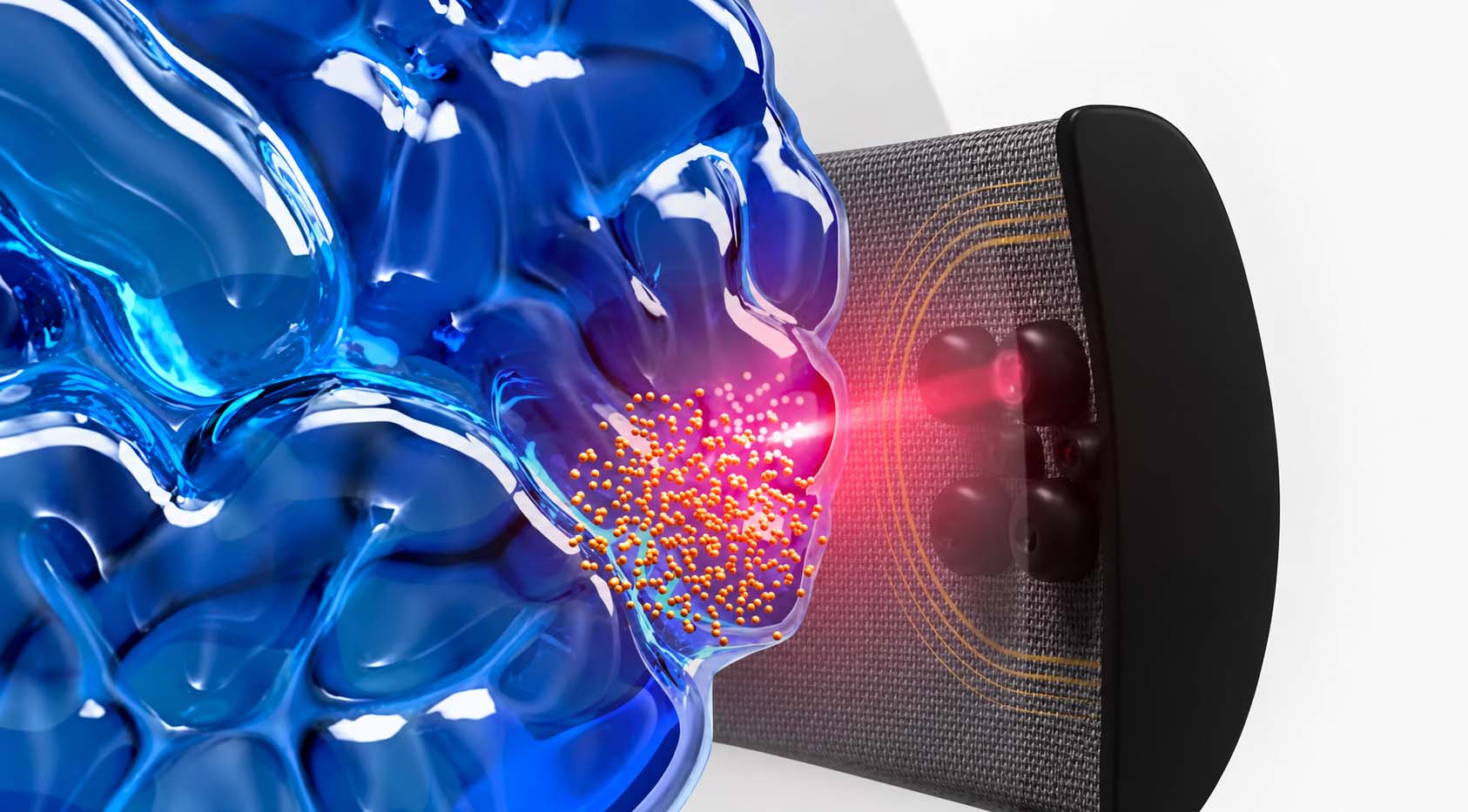
At Imperial College London, ARIA-backed teams are already applying this approach in practice. Projects such as Professor Mengxing Tang’s acoustic neural interfaces and Dr. Nir Grossman’s temporal interference stimulation are being designed to integrate into existing clinical workflows, with an emphasis on wearable and outpatient use rather than specialist implants. This design choice supports a “neighbourhood health” model, shifting neurotechnology beyond tertiary hospitals and into community settings, where neurological disorders account for an estimated £4.4 billion in annual NHS costs.
As the deadline for the current Blue-Sky Proof-of-Concept Fund approaches on January 20, 2026, the UK’s strategic focus is becoming clear. Through the combination of the UK’s research expertise, ARIA’s tolerance for failure and the NHS’s capacity for mass-market solutions, the UK is positioning itself as the global hub for ethical, scalable, and non-invasive brain health interventions.
Produced with support from

.svg)







.svg)

