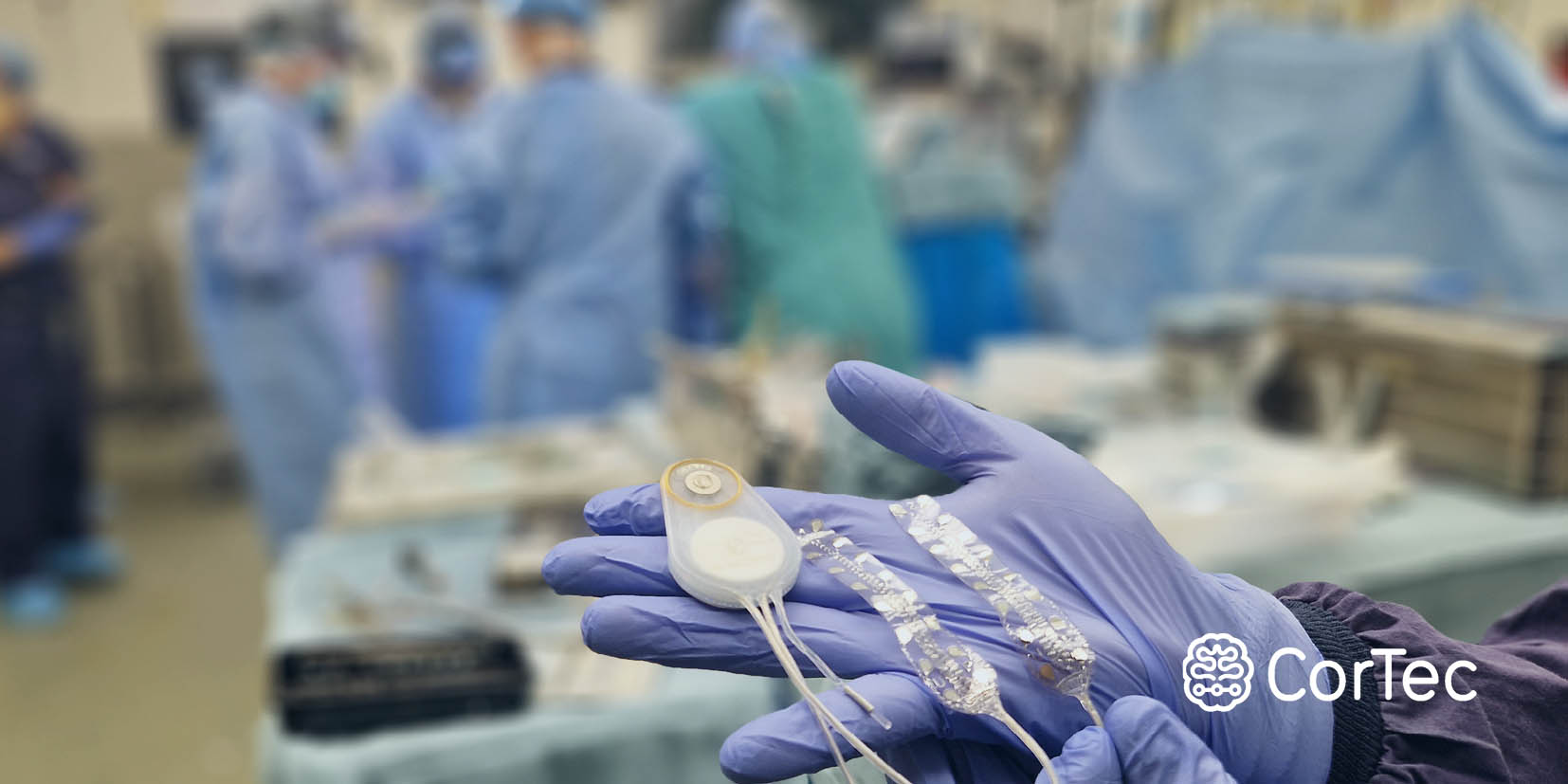

A new generation of neural hardware is taking shape in New York. In recently published work, researchers at Columbia, Stanford, Penn and NewYork-Presbyterian unveiled BISC, the Biological Interface System to Cortex. BCIS is a paper-thin silicon chip that slides into the space between the skull and the brain “like a piece of wet tissue paper.” Despite its size, it integrates 65,536 electrodes, with channels for recording and stimulation and a wireless link capable of transmitting data at 100 Mbps.
While most implantable BCIs currently rely on somewhat bulky electronics housed in skull-mounted canisters or external racks, BISC condenses the entire system onto one subdural chip supported by a small wearable relay. The chip thus stands out beyond its incremental increase in channel count; it reflects a shift in architecture from rack-based systems to fully self-contained silicon with high-bandwidth wireless links. With BCIs quickly moving into trials and toward long-term use, much of the underlying progress is occurring in the architecture of the silicon itself.
BISC is built as a single silicon chip that sits in the thin space between the skull and the brain. The device integrates 65,536 electrodes on one die, with 1,024 channels available for recording and 16,384 for stimulation. Instead of relying on a skull-mounted canister, the implant transmits data wirelessly to a small external relay, which then sends signals on to nearby devices at roughly 100 Mbps. The entire system takes up not more than a few cubic millimetres and is described by the team as thin enough to handle like “a piece of wet tissue paper.”
The recently published Nature Electronics paper elucidates engineering detail behind this design. The neural chip compresses much of a traditional BCI system into one piece of silicon. Instead of running thousands of wires, it uses on-chip multiplexing to route signals from large electrode arrays. The recording circuits are designed to capture tiny cortical signals while keeping electrical noise low, and the whole device operates within strict thermal limits for subdural implants. A burst-based ultra-wideband radio provides high data rates without excessive heating.
The research team positions BISC as a platform for multiple clinical applications. In epilepsy, it could record cortical activity at high resolution and deliver targeted stimulation. In paralysis and motor or speech impairment, the bandwidth and coverage support richer decoding than current systems allow. Early demonstrations include animal work and intraoperative human recordings during neurosurgery, supported by NIH-funded epilepsy projects. The effort brings together engineering groups at Columbia with neuroscientists at Stanford and Penn and clinicians at NewYork-Presbyterian, all contributing to early testing and the translational pathway.
Early BCIs relied on external racks linked to the brain through percutaneous connectors, which limited long-term use and carried substantial infection risk. Newer systems moved electronics into skull-mounted or chest implants, reducing those risks but still depending on bulky modules for power, processing and telemetry. BISC represents a further step, folding much of the system onto a single subdural chip, with only a thin wearable relay outside. It is not the first implant with integrated silicon, but it is one of the first to push this level of functionality into the narrow space between skull and cortex.
This shift affects clinical practice as much as engineering. A thin, self-contained implant that sits between skull and cortex avoids long under-skin leads to chest-mounted hardware and reduces the overall footprint under the scalp. It is easier to live with for people who already manage significant medical routines, and it makes multi-site implantation more realistic. Instead of one large module, several small subdural chips could be positioned over different cortical regions. The Columbia group highlights epilepsy, motor and speech impairment and visual disorders as areas where high-density coverage with minimal bulk can change how mapping and therapy are delivered.
Placed next to commercial efforts, BISC occupies a new position in the design landscape. Paradromics uses penetrating microwire arrays paired with skull-mounted modules to achieve single-unit resolution and high data rates useful in speech decoding. Precision develops thin-film surface arrays with external modules for amplification and telemetry. Neuralink embeds a skull-mounted implant that houses the electronics. BISC takes the surface approach but pushes integration further by placing recording, stimulation, power management and radio on a single chip in the subdural space.
That shift also carries economic implications. Highly integrated chips are expensive to design and manufacture, but they pack considerably more capability into a smaller volume, which can lower surgical complexity and reduce the amount of supporting hardware over the long term. This may expand the feasibility of multi-site implants or short-term diagnostic placements in areas such as drug-resistant epilepsy, where size and procedural burden matter. As integration improves, BCIs are likely to diversify into smaller, application-specific form factors rather than a single dominant architecture. BISC offers an early example of what that next layer of miniaturised neural hardware could look like.
.svg)








%20copy.jpg)