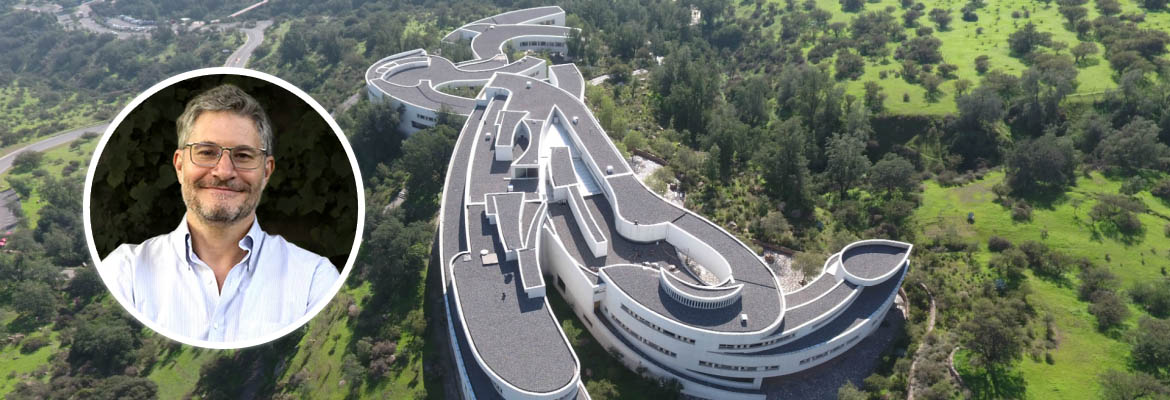
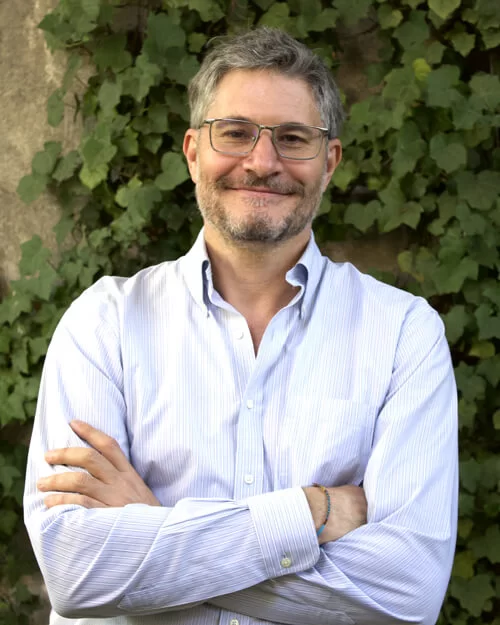
Biological aging is not a single, linear process, but a network of independent internal systems evolving at different speeds. While chronological age is measured by the calendar, Agustin Ibáñez, Director of the Latin American Brain Health Institute (BrainLat) and professor at the Global Brain Health Institute (GBHI) at Universidad Adolfo Ibáñez, is proving that your true age is a reflection of how these internal systems decay.
His research treats the brain as a central window into the whole body and environment, integrating data from cardiovascular and metabolic markers to create a unified model of systemic health. By tracking how these different networks influence one another, Ibáñez provides a systems-level view of aging that identifies the transition from health to pathology long before clinical symptoms appear.
Aging lacks a singular scientific consensus, yet Ibáñez clarifies the concept by decoupling the passage of time from the rate of physical decline. He distinguishes between Chronos, the linear accumulation of years, and Kairos, the speed of system decay. In biological terms, this represents the difference between how many years you have lived and the actual age of your internal systems.
For Ibáñez, the priority of longevity science isn’t just about prolonging life, but the precise mapping of the silent transition from a healthy state to an unhealthy one. Because neural degradation is often asymptomatic until it reaches a certain threshold, quantifying this invisible shift is essential for effective interventions and management.
If neurodegenerative diseases are the biological equivalent of wrinkles on the skin, how do we measure the speed at which they appear? By defining aging as a measurable signal of system decay rather than a chronological milestone, Ibáñez identifies stages of decline long before they become clinical symptoms.
To measure this deterioration in the brain Ibáñez uses "Brain Clocks". These diagnostic tools calculate the Brain Age Gap (BAG), the difference between an individual’s chronological age and the biological age of their neural and systemic networks. Using high-resolution EEG or fMRI data, researchers are able to predict a "neural age". A positive gap, such as a 50-year-old with the brain age of a 60-year-old, indicates accelerated biological deterioration.
This acceleration of aging is not distributed evenly or fairly. Data reveals that BAGs are worse in individuals with pre-existing mental health conditions, neurological diseases, or those living in tough environments (like high pollution or high social inequality). Unhealthy lifestyles also make the clock tick faster. His research has also found that brains tend to age faster in women and those countries with more inequality. On the flip side, his research suggests that creative experiences, such as playing an instrument or learning the tango, can slow brain aging.
While the clinical gold standard remains the MRI, Ibáñez has recently pivoted toward more accessible, portable tools. These include EEG, Natural Language Processing and audio analysis. Here, he has developed a concept known as the speech clock, which extracts around 700 features (like prosody, syntax, and latency) from just five minutes of a person’s natural speech to detect accelerated aging before any symptoms are visible.
However, moving the diagnostics from the lab to the field with portable tools like EEG and speech clocks isn't without its problems. Critics often point to the issue of noise. While an MRI gives you a high-definition map, EEG is much messier; it’s incredibly sensitive to non-brain signals like a patient blinking, clenching their jaw, or even electrical interference from a fridge in a rural clinic.
But Ibáñez has a pragmatic, almost entrepreneurial outlook on this. He isn’t waiting for a perfect, portable MRI to be invented; he’s betting on the idea that accessibility must come first. His view is that we can use AI to bridge the quality gap, using smart algorithms to denoise the signals and combining it with speech and heart data to create a self-correcting system. The tech doesn’t need to be flawless right now to be world-changing; it just needs to be out of the lab and in the hands of the people who need it most.
Ibáñez’s belief that "aging isn't a single number” is the foundation of his Multiclock thesis, which moves away from "brain-centric" medicine and treats the body as one integrated system. He argues that we all have a “dynamical heart age, a lung age, and a brain age”.
He talks of how "every brain has its own rhythm, a biological clock that tracks not only the passage of time but also the influence of our environment and life circumstances." This framework posits that aging is a decentralized process where individuals possess distinct dynamical ages (clocks) for their heart, lungs, and brain. Within this model, Ibáñez has developed biobehavioural age gaps (BBAGs), which estimate overall health aging by calculating the specific balance between protective and risk factors in an individual's life.
By using other biomarkers such as Heart Rate Variability (HRV), visceral signals, and immune markers, Ibáñez provides the necessary context for neural data. He models what he calls computational synchrony; how the rhythm of the gut or the beat of the heart directly influences the central nervous system.
On one side, we have the complex reality of the exposome: the sum of environmental influences, from pollution and diet to social inequality. On the other side, we have traditional lab models that are too simplified to catch the big picture. Ibáñez proposes to bridge this gap through digital twins: AI models of individuals, built from real-world data, that allow researchers to simulate how specific interventions might slow down an individual’s unique aging trajectory.
"Your brain health could be influenced by something as simple as your postal code," he notes, but by using tools like the Speech Clock and EEG to democratize diagnostics, Ibáñez is ensuring that the future of brain health is data-driven and accessible to all, regardless of your wealth.
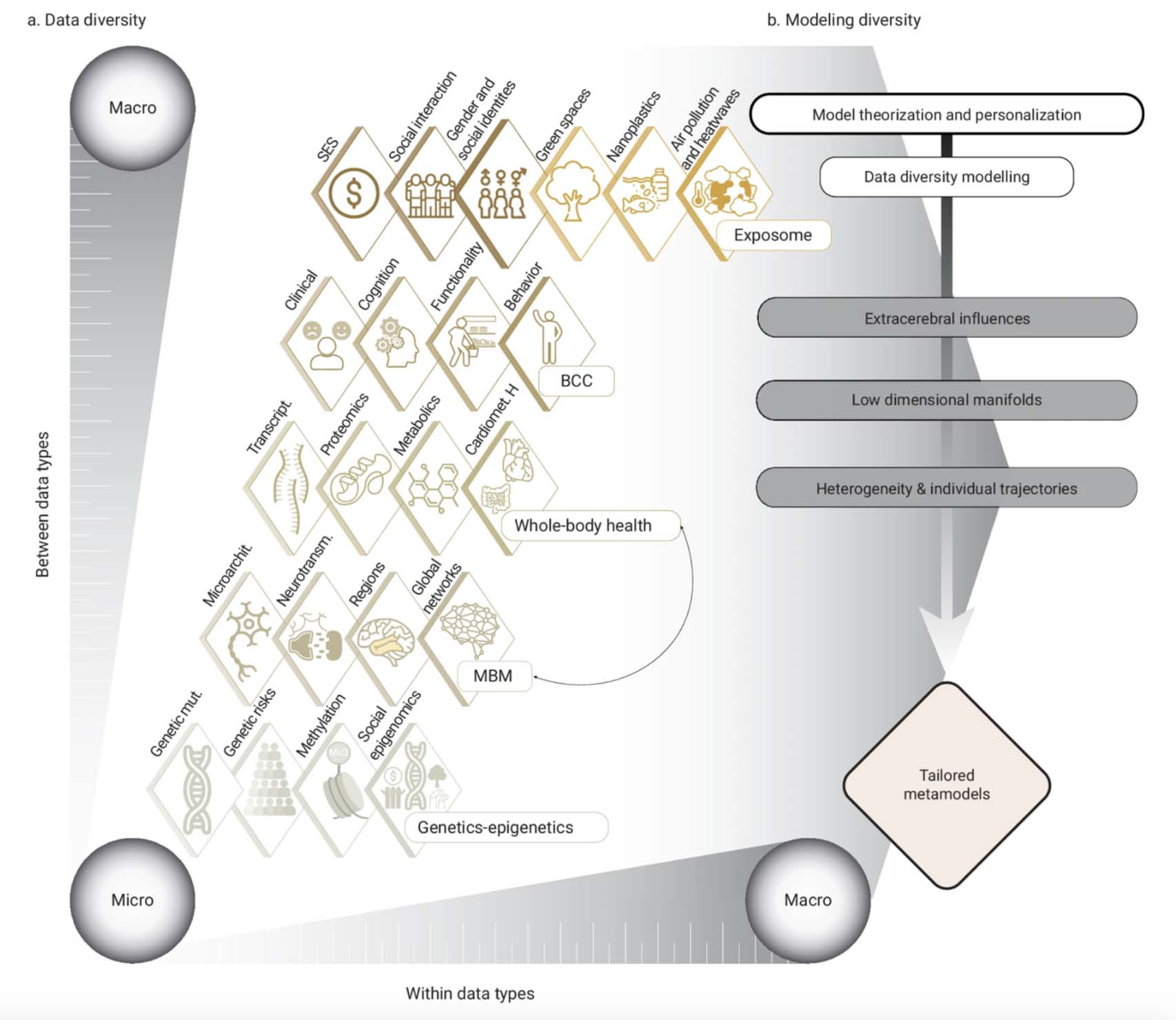
Currently, 90% of what we know about the human brain is derived from just 10% of the global population, specifically those from "WEIRD" (Western, Educated, Industrialized, Rich, and Democratic) nations. Because of this data gap, modern precision medicine is often inaccurate for people in the Global South, failing to account for their unique genetics and environments. For example, it doesn't account for the vast genomic diversity of Latin America, Africa and Asia. Genetic markers like APOE4 can behave differently depending on a person's ancestry and environment; a model trained in Boston may fail a patient in Buenos Aires.
Through initiatives such as ReD-Lat Ibáñez is building a diverse neurological dataset to ensure that the future of brain health is accessible to all, regardless of wealth.
The evolution from the original Brain Clock to the all-encompassing Multiclock Thesis represents a shift toward a holistic understanding of human degeneration. It rejects the isolation of the brain, focusing instead on the interplay between time and metabolic, immune, and cardiovascular clocks as they react to the exposome.
"Every brain has its own rhythm," Ibáñez concludes, "a biological clock that tracks not only the passage of time, but the very story of the life we have lived". They provide the necessary framework for managing neurodegenerative decline, transforming aging from an inevitable countdown into a measurable, manageable system of biological variables.
.svg)