
Neurotech is becoming a serious career magnet. The field still carries the pull of frontier technology, but that is no longer the whole story. Leading startups now offer sharper compensation, stronger technical teams, and more visible career paths than even a few years ago. But with that, for many candidates landing a role is getting increasingly difficult. Competition is up, expectations are tight, and companies hire with far less room for risk.
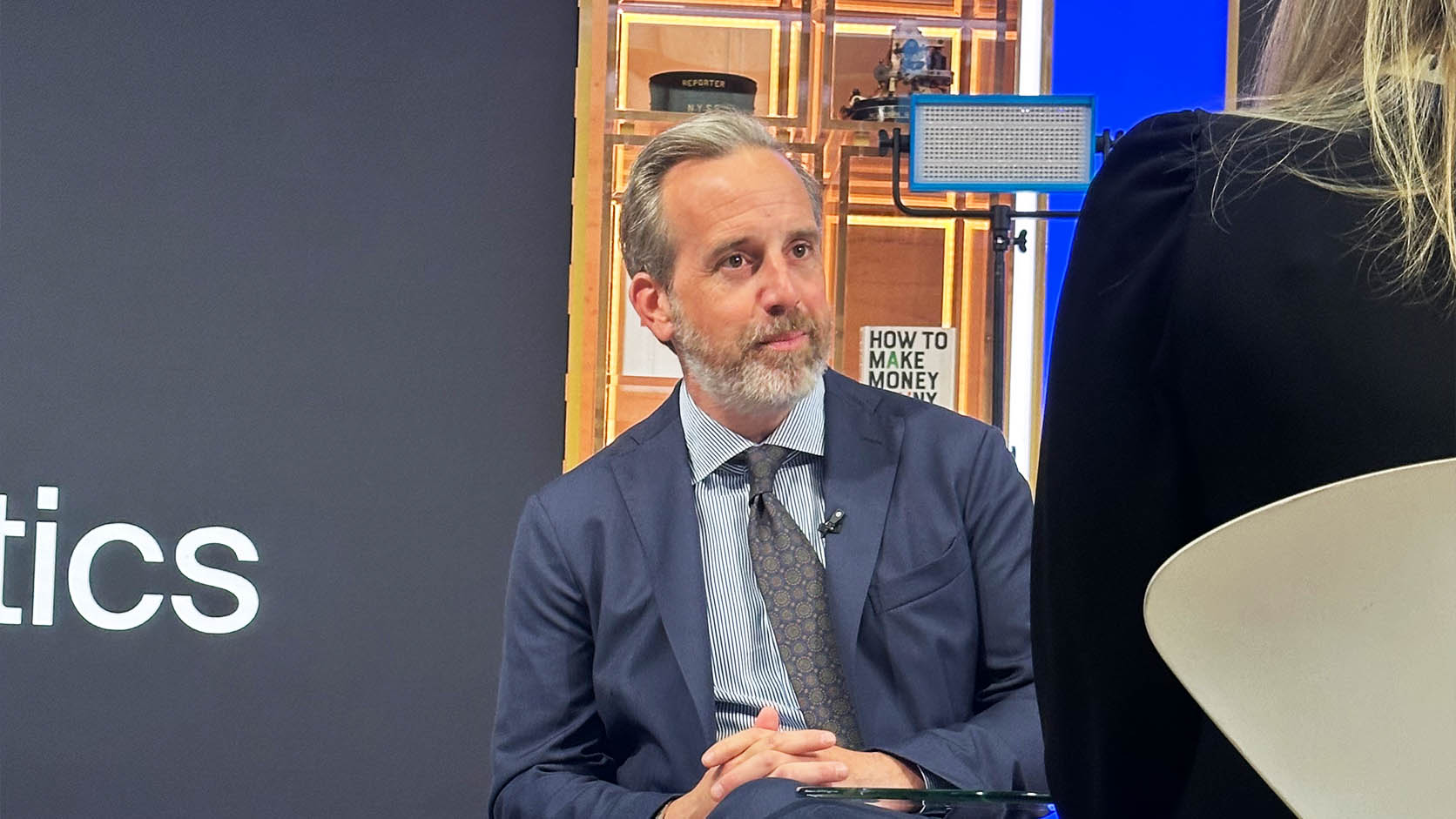
Chay Carter has watched that shift from close range. He originally studied psychology in London, where early exposure to alternative mental health treatments and neurotechnology sparked an interest in what still felt like a fringe category. He began his career in investment banking recruitment, before moving into private equity recruitment in renewable energy in New York, and helping launch a life sciences recruitment business on the US West Coast.
About 18 months ago, Carter decided to build around his long-term interest in neurotech directly, launching Carter Sciences, a neurotech recruitment firm, and Reccy Neuro, a neurotech job platform. He sees the category as one of the most innovative in technology, and one whose ambition is now matched by growing demand from job seekers. We discussed the current job market, how candidates can stand out, and what Reccy is trying to solve.
What makes this an employer’s market in neurotech right now?
A clear sign is the volume of candidates competing for the same roles. There is an abundance of people looking for opportunities, including graduates coming out of educational programs and candidates affected by downsizing who are trying to get back into the market.
That means each neurotech position attracts a large number of applications, giving employers a wide pool to choose from. Not all of those applicants are genuinely neurotech-specific, but across recruitment more broadly it is clearly an employer’s market. With the changes happening across tech, neurotech is no different.
Where do you see the biggest talent gaps ahead?
Electrical engineering remains the hardest area to hire for. There is a lot of exciting work happening in machine learning, data science, and AI in neurotech, particularly around speech decoding, brain decoding, and the interpretation of neural data such as EEG recordings. But the strongest bottleneck is still in electrical engineering.
Part of that is geographic. Software can often be done remotely, while hardware work usually requires people to be on site. Many startups are chasing the same electrical engineering profiles at the same time. Another difficult area is sales talent in specific territories, where finding commercial people with the right domain knowledge can be very challenging.
What is the main friction in the market for both talent and recruiters?
The biggest friction right now is a mismatch between expectations.
Many people coming out of educational programs want to work at BCI companies because it is the hottest area and there is a lot of money flowing into it. That creates the impression that there are many opportunities. In reality, many of these companies are still small, have extremely high hiring bars, are often geographically specific, and have a limited number of open roles.
At the same time, more advanced companies are often looking for people with three to five years of medical device experience. Many candidates entering the market do not have that background. There is a disconnect between people who understand how to ship medical devices commercially and people who have strong technical skills but no industry experience.
From a company perspective, the problem is being overwhelmed by volume and underwhelmed by relevance. Huge numbers of people are applying for jobs, sometimes through AI tools that apply automatically on a candidate’s behalf. Neurotech is still a niche and difficult hiring market, and not all experience transfers directly.
"The biggest friction right now is a mismatch between expectations."
How valuable is a mixed profile in neurotech?
Startups often value people with experience across several areas because early-stage companies require employees to wear multiple hats. Someone in sales might work closely with regulatory, clinical, marketing, and business development teams. The same applies in regulatory roles, which often overlap with quality functions. In some cases, CTOs also end up covering quality because the company does not yet have the resources to separate those roles.
That said, it is difficult to have that breadth immediately after finishing education. The strongest profiles usually start with one clear anchor, such as embedded systems, clinical expertise, or machine learning. From that base, people can expand their value inside a company.
It is important to be able to bridge worlds and understand the broader context of a business. But the market still needs specialists. The most valuable profiles are specialists who also understand the bigger picture.
Which functions have become more important for actually shipping products?
I have seen a clear shift from innovation-focused hiring toward execution-focused hiring.
Engineering remains critical, especially across firmware, hardware, and signal processing. But as companies move into later stages of development, the question becomes less about whether the technology can be built and more about how it can be productised and brought to market.
That has increased the importance of quality, manufacturing, and experienced engineering talent that can support productisation. The market feels more mature now, less centred on science-project experimentation and more focused on shipping.
What advice would you give neurotech talent applying to hot startup roles?
Submitting an application is still important because it officially registers your profile with the company. But one key factor is your public profile, especially LinkedIn. Your tagline is often the first thing people see, and it should clearly describe what you do. Many candidates focus on what they want to do, for example saying they want to work in neurotech. In an employer’s market, companies are more interested in hiring specialists in specific areas.
It is important to think about what you specialise in, how you differentiate yourself, and how that expertise is visible through your resume and online presence. Your resume should be concise and clearly highlight your strongest capabilities.
Candidates should also be realistic about the structure of the industry. Many people focus only on BCI companies or wearable startups, but those organisations are often small and not yet commercial. More established companies such as Medtronic, Boston Scientific, or Abbott also offer opportunities to work on complex neurotechnologies. Instead of a spray-and-pray approach, it is better to target specific companies where your expertise is directly relevant.
"It is important to think about what you specialise in, how you differentiate yourself, and how that expertise is visible through your resume and online presence."
Why start Reccy Neuro after more than a decade in recruiting?
I started Reccy Neuro because I realised there was a major gap in the market.
I stopped advertising jobs on LinkedIn four or five years ago because I was receiving too many irrelevant applications and too many requests for feedback from candidates who were not suitable for the roles. Time is limited for everyone involved.
Startup hiring often begins informally, through founders, co-founders, and their networks. If that does not work, companies usually turn to LinkedIn, Indeed, or other job boards. But those platforms are not built around the realities of hiring specialised talent. They generate volume, but not necessarily relevance.
Reccy Neuro was designed to address that. Headhunting will always remain important because the best candidates are often not actively applying. But for job boards, we wanted to replace the high-volume, low-relevance model with something more specialised and more transparent.
The platform focuses on the technologies, company stages, and hiring nuances that determine whether someone is actually a good fit for a role. Candidates and companies can build neurotech-specific profiles, and the system matches them accordingly.
We also wanted to give candidates more clarity. One of the biggest frustrations with traditional job boards is applying and hearing nothing back. With Reccy, candidates can see how closely their profile matches a role, which gives them a clearer sense of where they stand. The aim is to create something closer to a recruiter-led experience than a generic listings platform.
.svg)