Venture capital has played a defining role in shaping the trajectory of neurotech, yet many scientist-founders still find the funding landscape opaque. Long timelines, regulatory hurdles, and high development costs make the path to market especially challenging compared to other fields.
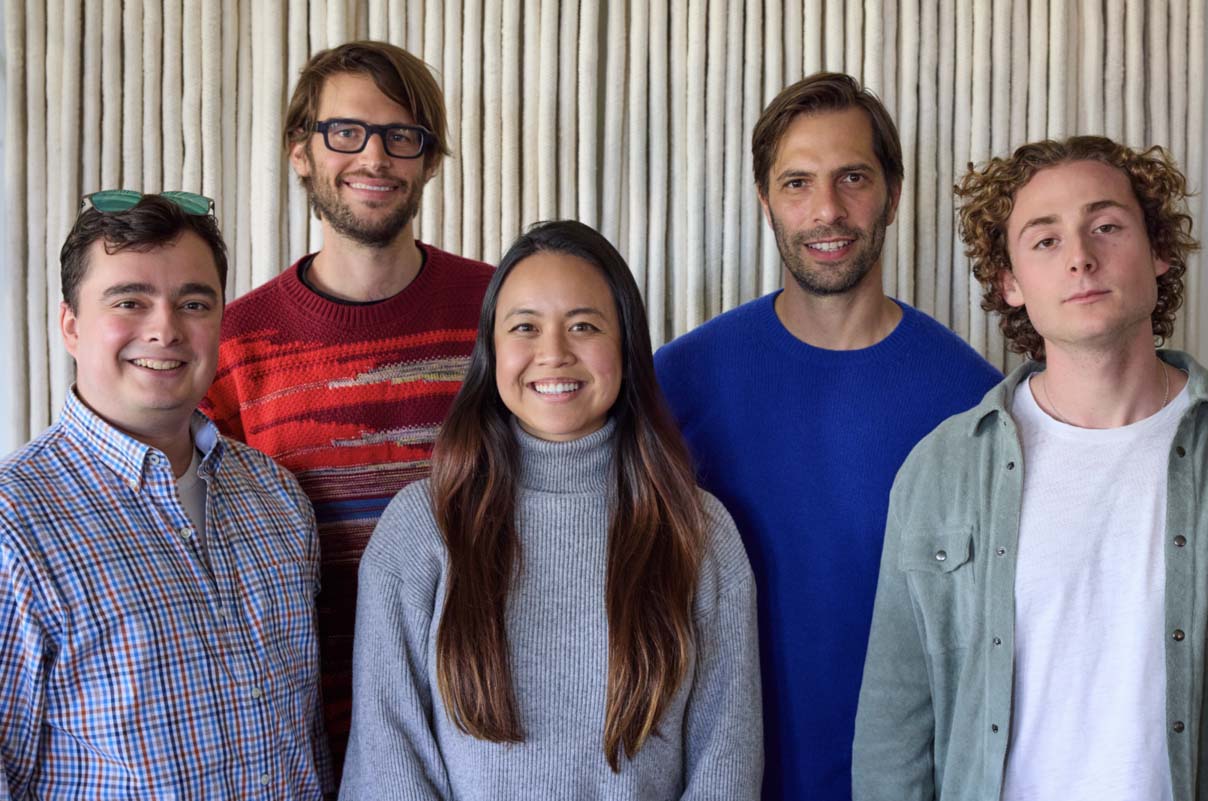
This is where PsyMed Ventures is carving out a niche. Focused on mental health, psychedelics, and neurotechnology, the firm backs early-stage brain-based companies and recently launched the Future Neuro Founder Program to support the next generation of entrepreneurs in the space. At the center of this work is Caitlin Ner, Director of Operations at PsyMed Ventures.
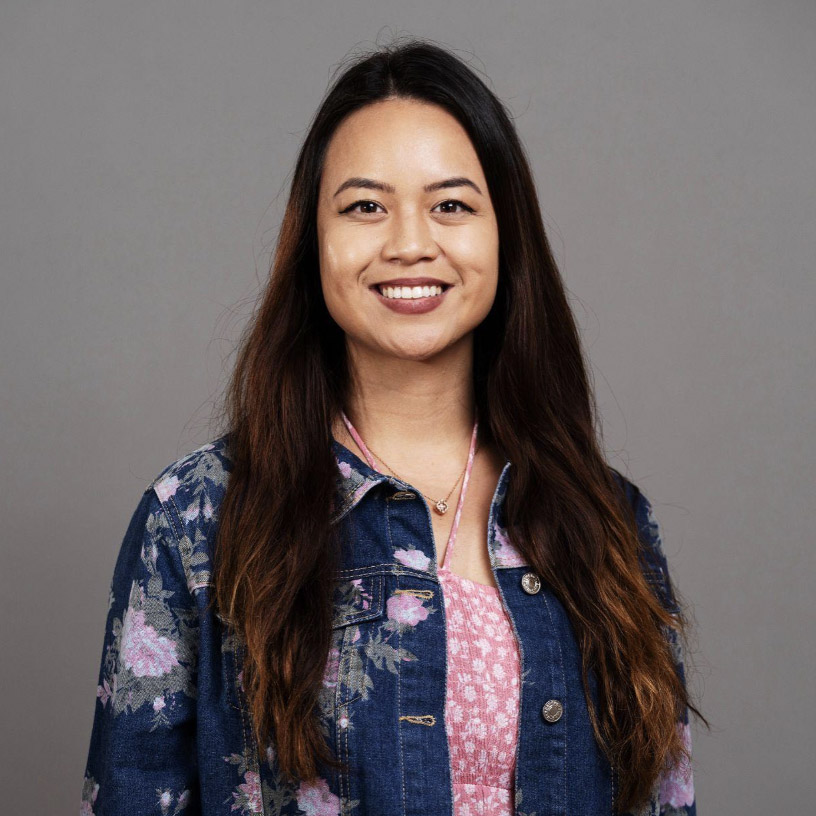
With a background spanning economics at Harvard, venture investing at BlackRock, and operational roles in health-tech startups like Cerebral, she brings both financial and hands-on experience to supporting founders. Alongside this, she’s motivated by a strong personal commitment to advancing mental health and neuroscience innovation, which shapes the way she approaches company building in the field.
I spoke with Caitlin about what it means to invest in neurotech today, where the biggest gaps lie, and how founders can prepare for the long game.
Why does neuroscience need specialist investors?
Neuroscience needs specialist investors because the field is unusually complex with uncertain biology, heterogeneous patient populations and outcomes that are difficult to measure. The questions aren’t just about market, traction, and revenue; they’re about whether the underlying science is sound, whether an approach or modality fits a real patient need, and how early data collection can be made more credible for future clinicians, partners, and regulators.
Specialist investors bring the expertise to evaluate technical risks, guide indication and product strategy, and help founders design programs. They are especially relevant in the earliest stages, where investors don’t just provide capital but also provide scientific judgment and clinical insight. This helps founders derisk their startups well before later stages, when more generalist investors join. In mental and brain health, the stakes are super high, so these types of partnerships are invaluable.
How do you see the current state of financing in neurotech?
The financing landscape is polarized, with significant venture and strategic capital flowing into hardware-intensive areas like invasive implantable brain-computer interfaces and clinically validated neuromodulation platforms. These categories are attractive because they are “moonshot” ideas with viable use cases across indications. On the other end, capital is also returning to precision psychiatry, with Alto Neuroscience’s IPO underscoring that biomarker-driven approaches can find liquidity paired with robust clinical endpoints.
Gaps remain that play to our sweet spot at PsyMed of early-stage neurotech. There have been big-ticket rounds in invasive BCIs, but there’s still undercapitalization in non-invasive and minimally invasive interfaces and scalable brain health monitoring. The broader venture market is also still hesitant on preclinical or lifestyle-oriented plays, which leaves us with the opportunity to support founders building evidence-based, translational platforms before they hit the larger funds' radars.
Looking ahead, a critical need is for more VCs to develop a nuanced understanding of differentiation and viability among newer neurotech platforms across all indications to understand which are truly clinically grounded and scalable versus still speculative.
What does Psymed look for when evaluating a neuroscience startup?
We conduct diligence first and foremost on the co-founders. We look for top 1% entrepreneurs who are excellent at execution, excellent communicators, and have clarity of vision to build in a space where timelines can be long and complexity high.
We take time to understand the founder's character, how they can make decisions under uncertainty, and the caliber and complementary skillsets of the broader team. Neuroscience companies succeed when they have both cutting-edge technical talent and operators who can translate discoveries into products and pathways.
Beyond the people, we also zone in on pathway and distribution models, which differ significantly across technologies. We look into the most credible route to market and how the company can enforce clinical adoption or consumer engagement. Defensibility is another pillar where strong IP, proprietary datasets, or unique regulatory positioning are key to being resilient to competition.
How early is too early for venture capital?
“Too early” is less about stage and more about clarity of translation. At PsyMed, we are pre-seed and seed investors, and in some cases, have been the very first check into a company. What feels too early is when a discovery is still an intriguing experiment, but there is no clear path to reproducibility, protectability or application.
Some science should remain in academia for further exploration before more core mechanisms are better understood. A company becomes investible when the founder has mapped out their vision for credible pathways to commercialization.
That could mean having initial proof of concept data, even if only preclinical models, a founding team with complementary expertise, or an early IP strategy. Early-stage investors are not looking for full validation, but it’s important to think early on about defensibility and thoughtful milestones.
What do scientist-founders often underestimate about working with venture capital?
One of the biggest blind spots is not appreciating how venture fund life cycles will influence the speed of company building. Most funds run on a ten-year horizon, which means that investors will be looking for milestones like exits, IPOs, or reaching unicorn status in an expedited timeline, not on the timeline of a multi-decade research program.
Academic science is built around exploration; VC is built around translation and acceleration. Scientist-founders may underestimate how quickly they’ll be expected to move from promising data to a credible product pathway.
Where do you see the most momentum globally?
I see the deepest momentum in the US and UK. The US has the density of capital, talent and translational ecosystems. The UK has also emerged as an exciting hub because of its strong neuroscience research universities, a favorable regulatory environment for early clinical trials, and a growing number of early-stage venture investors. Europe more broadly has world-class research, and we’re looking to see how more EU companies scale companies to global markets and navigate fragmented capital markets.
China is also moving fast with heavy state-backed funding and ambitious BCI programs, as well as rapid development cycles. Australia is another region worth watching because of its world-class neuroscience research centers, supportive grant infrastructure, and a reputation for efficient, high-quality clinical trials. We invest globally at PsyMed, with the majority of our founders in the US due to our investor networks, and some portfolio companies based in Europe and Australia.
Looking 5-10 years ahead, what would you love to see more founders building?
I believe clinical indications are very important for neuro startups, but I’m also excited about the frontier of human augmentation. Beyond therapy, neurotech has the potential to expand cognition, resilience, and performance to shape how humans learn, focus, and recover.
This means expanding beyond invasive BCIs and looking into more non-invasive interfaces and digital products that can blend seamlessly into daily life. In 5-10 years, I hope to see more founders building responsibly by translating science into technologies that not only alleviate suffering but also enhance human potential.
PsyMed recently launched the Future Neuro Founder Program. What motivated this initiative, and how does it support the next generation of neuroscience entrepreneurs?
We realized there was a wealth of innovation and knowledge in academia around the world, but many academics didn’t have the startup operating experience to leap to build their own companies instead of pursuing other career paths. We have funded entrepreneurial scientists in our own portfolio who were initially scrappy but learned how to transition from academia to becoming CEO’s of their companies, so we were confident the leap was possible.
As we deepened our involvement in the neuroscience industry, we met more researchers in academic labs exploring spin-outs, many facing the same challenges around company formation, fundraising, and translating research into a commercial roadmap. That pattern made it clear there was a need for a structured way to support them.
We at PsyMed Ventures then decided to partner with KdT Ventures in 2024 to launch a workshop for future neuro founders, which became a success with over 115 global universities. In our 2nd edition, we expanded to a program focusing on more tactical hands-on sessions, a community component where aspiring founders can connect offline, and a range of founder panels to pitch deck reviews.
We believe that with the right resources and support, there will be more top 1% neuro founders spinning out of academic backgrounds, and we want to encourage this next wave of innovation from the Future Neuro Founders Program.
PsyMed’s work sits at the intersection of science and capital: helping translate neuroscience breakthroughs into sustainable ventures. By investing early, the firm takes on the scientific and operational uncertainty that many traditional funds avoid, guiding founders through the long arc from hypothesis to market readiness. It’s a model that depends as much on mentorship and judgment as on capital itself, and one that is slowly redefining how neuroscience innovation is financed.
For Caitlin Ner, the future of neurotech lies both in advancing therapies and cultivating the ecosystem that makes those advances possible. That means supporting scientists as they become entrepreneurs, building investor literacy around complex technologies, and shaping a community of founders who approach the brain with rigor and imagination. If neuroscience once struggled to find its commercial footing, the next decade will see it stand on its own, powered by founders and investors who understand the science as deeply as the opportunity.
.svg)